
I find myself in the wandering of life
I find myself not knowing where to hide
I'm still looking for my life
- “I Find Myself,” Zan Fiskum
In my small town about an hour out from downtown Houston, I was in fourth grade when all of my teachers switched out their overhead projectors for a Chromebook cart. At 9 years old, each of us graduated from computer lab and were assigned our very own computer ID. When we finished our work early, instead of playing tic-tac-toe, we’d each spend our time individually playing Cool Math Games online.
I’m 24 years old, which puts me at the older end of Generation Z, often referred to as “digital natives,” “the anxious generation,” or “Zoomers.” We are one of the great social experiments of our era; as we become adults and take on leadership in our homes, the workforce, politics, and our cities, policymakers and researchers are asking what they should expect from us.
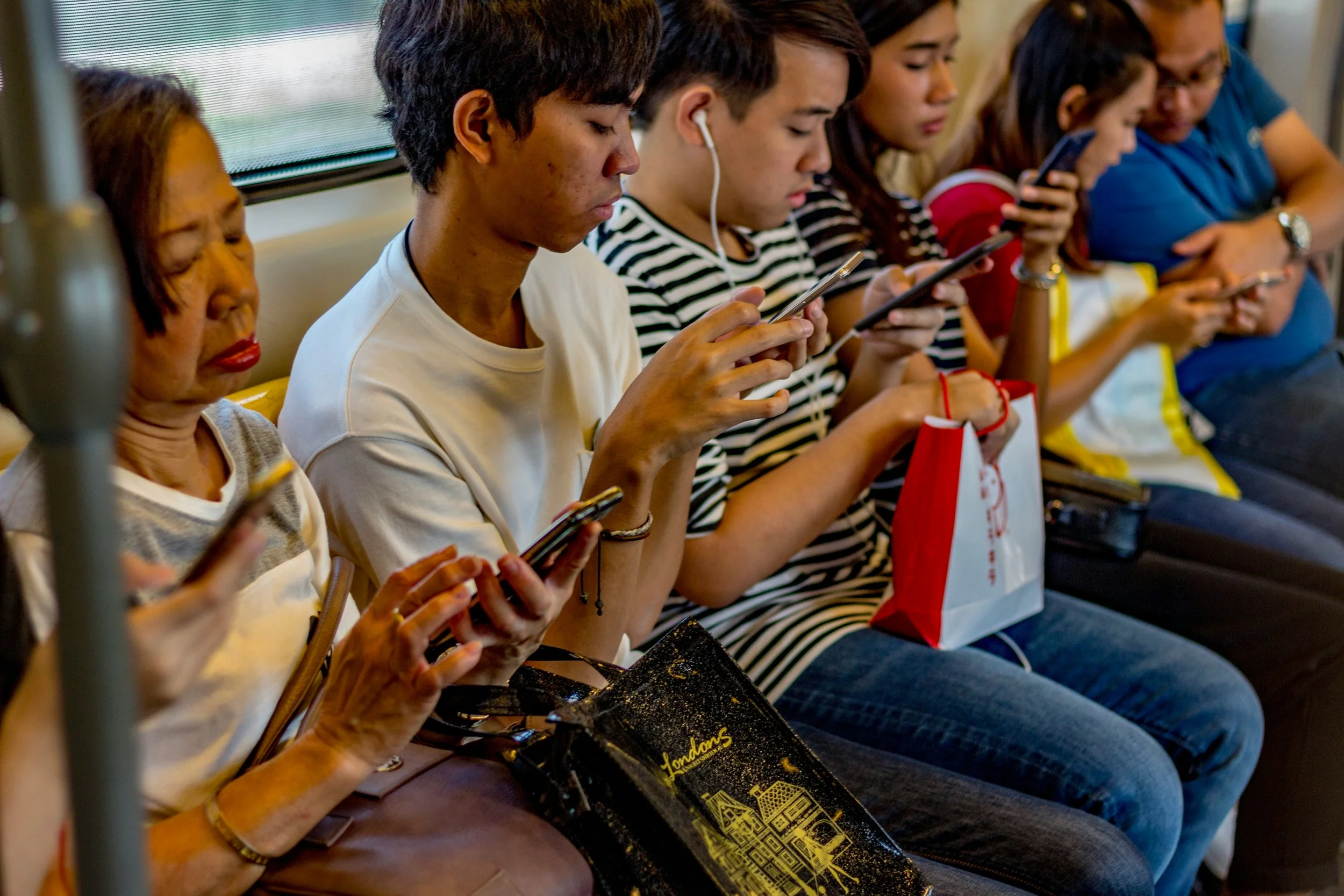
We are the most ethnically diverse generation in American history. Over 65% of Generation Z reports experiencing mental health struggles. We are largely religiously unaffiliated. And we are the most digitally saturated generation in human history, averaging over five hours a day on social media alone, with one in three teens reporting they’re online almost constantly throughout the day.
And yet, we are a generation beginning to self-regulate. In 2025, Pew Research found that 44% of teens say they had cut back on their social media use, up from 39% just 2 years ago. This growing shift may mark the cusp of a genuine counter-reaction.
Graduating classes across the country have booed commencement speakers who mentioned AI. When Eric Schmidt told graduates at the University of Arizona that AI “will touch every profession, every classroom, every person and every relationship,” the crowd booed loud enough that he paused mid-sentence. The New York Times just launched a “Touch Grass Challenge,” a monthlong series asking readers to spend 20 minutes outside each day without their phones, to host a 1990s-style hangout without GPS, and simply be somewhere without a screen. Broadway just had its highest-grossing season on record: $1.91 billion, driven by people paying premium prices to sit in a room together and experience a shared story crafted by human hands. Phone-free gatherings and “dumb phones” are on the rise, along with offline travel experiences and “digital detox retreats.”
This shift back to embodied experiences — what Mark Rodgers called “the revenge of reality” — should not surprise us.
Social psychologist Jonathan Haidt, author of The Anxious Generation, describes human beings as “ultrasocial.” We were made to depend on one another and be united by a shared cause. In Solomon Asch’s famous conformity experiments, participants denied the plain evidence of their own eyes rather than break with the group around them. In Henri Tajfel’s group experiments, participants divided into arbitrarily labeled groups immediately began favoring their own, allocating resources to strangers they’d never met simply because they’d been assigned the same label. “We have deep needs for community and communion,” Haidt explained on a recent Ted Talk.
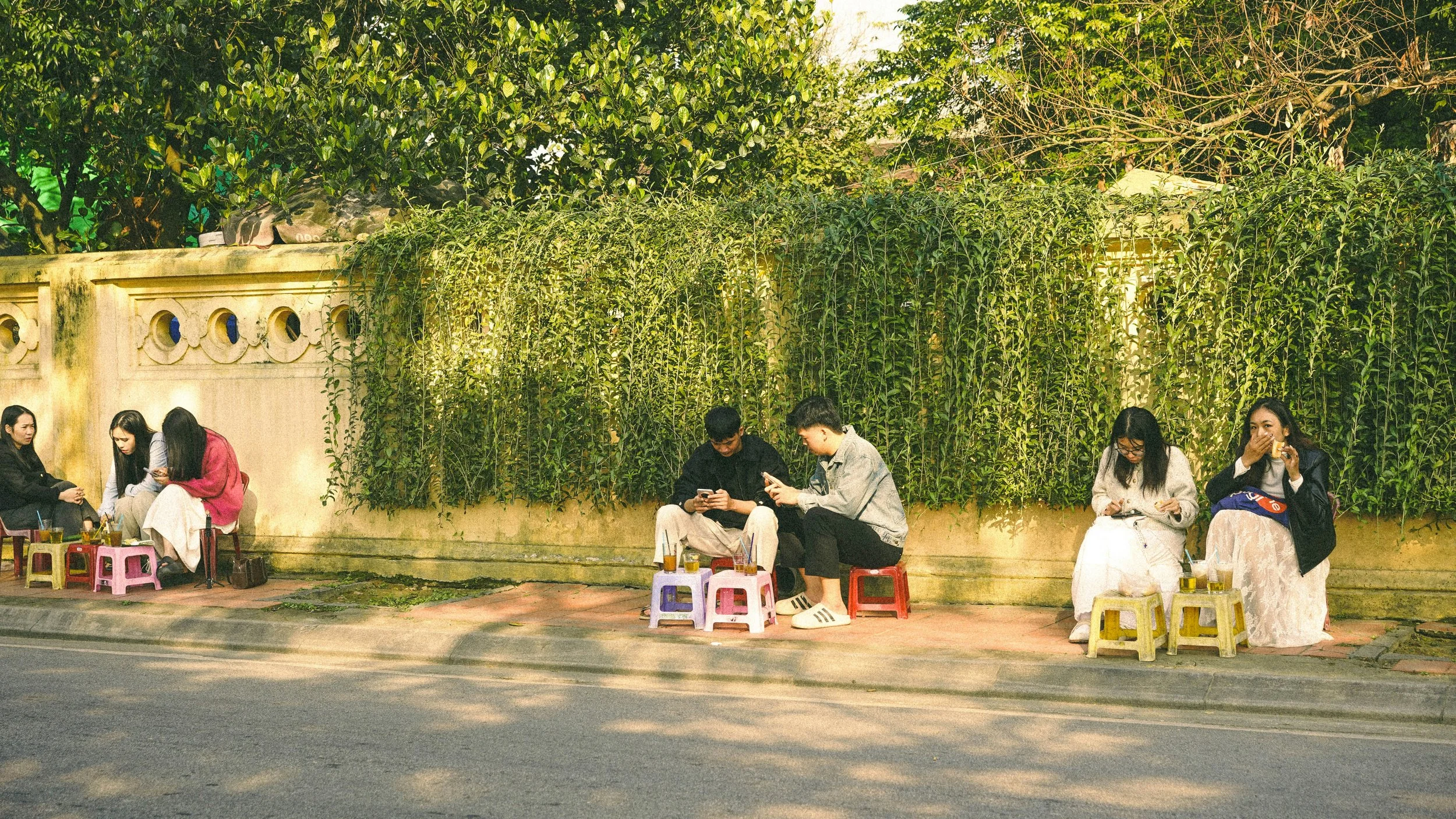
And yet, we have been asking screens to meet needs that they cannot meet. A recent assessment found that three in four teens use AI for companionship, including mental health support, and that leading AI platforms consistently fail to recognize the mental health conditions most common among young people.
“Screen apnea” describes the subliminal stress response our bodies have to screens, one that causes us to breathe less and brace without knowing it. Dr. John La Puma, author of Indoor Epidemic, describes the time we spend looking at our phones as “ultra-processed time;” “it is to your attention what ultra-processed food is to your metabolism. It’s instant gratification, and it’s designed to be addictive.” For a generation whose brains are still developing, this is not a small thing. We are being shaped by algorithms rather than communities, trained toward instant gratification rather than sustained attention. Freeing us from dependence on one another is not freedom; it would mean that nobody depends on us, and we were created for purpose.
Here at Clapham, we believe in pursuing shared flourishing. Our rhythms must be built on the understanding that we are ultrasocial, designed to have purpose, to work, to create, and to do so together. The hunger driving record Broadway attendance, “touch grass” challenges, and booing crowds at commencement is not a trend, it’s a deep human need reasserting itself.

Salt and Light Stories is a graphic novel we began two years ago. Each chapter tells the story of someone who served their community, created things well, loved their neighbors, made good art, and worked for the flourishing of their city. Our hope is that these stories will inspire younger generations in their pursuit of relationships, hobbies, and vocation.
As we are in the production phase of the graphic novel, we’ve been releasing related content on Substack through a series we’re calling Salt and Light Songs, conversations with artists and musicians that reflect on the stories we’ve told. This month, we’re featuring singer-songwriter Zan Fiskum alongside our comic about the film, Silence. Zan is a member of Gen Z and an artist committed to honest, well-crafted storytelling. After facing her own struggle with mental health, she serves her listeners by sharing her story with courage and honesty, fostering connection among those who hear her. As we release content with Zan over the next month, we invite you to subscribe to our Substack and follow along.

Zan Fiskum on The Voice
As we wrote in The Revenge of Reality: “We are embodied souls, and no matter what benefits or challenges AI creates, we will desire embodied creative experiences.”
