The Revenge of Reality: A Renaissance of the Real
Play is capable of opening us up and enriching us through genuine connection. When we allow ourselves, alongside others, to become completely engrossed in the competition, we experience joy and find respite from the weight of our daily lives. Play transports us to a world free of politics and economics. It gives no mind to who you are – when people of different faiths or political parties delight in playing together it cuts through the personal pedigrees or beliefs that too often divide. Play holds the power to restore our childlike verve.
- David Demaree, from “It’s Time to Play”, Plough Magazine

Many of us read Matt Shumer’s blog post “Something Big Is Happening” last month and the conversations that followed regarding the impact of AI on virtually every aspect of our lives (“Brace Yourself for the AI Tsunami” and “The Adolescence of Technology,” to name a few). The fact is, we aren’t going back, and the future is uncertain. But one thing is true:
we are embodied souls, and no matter what benefits or challenges AI creates, we will desire embodied creative experiences.
Before exploring where we're going, we need to explore the unspoken bargain that has governed creative culture: the tension between quality and quantity that has shaped every medium in human history.
Quality has always been expensive to make and expensive to consume. A Hollywood studio film requires tens – to hundreds – of millions of dollars, armies of specialists, years of production, and a distribution infrastructure that costs nearly as much as the film itself. The consumer pays accordingly — a movie ticket, a cable subscription, a premium streaming tier. The barrier to entry is high on both ends, and that barrier is, in part, what produces the quality. Scarcity creates focus. Constraint generates craft.
Quantity, by contrast, has always been cheap and getting cheaper. Paperbacks put books in the hands of millions who couldn't afford hardcovers. Broadcast television brought storytelling into living rooms at no marginal cost per viewer. YouTube collapsed the production barrier entirely. Anyone with a phone and an opinion can publish video content to a global audience. Quantity has become essentially infinite. The quality is, to quote Stan Lee, “‘nuff said.”
AI changes this equation: for the first time in history, quality and quantity are decoupling from cost. AI does not make quality automatic, but it dramatically lowers the floor of production competence and considerably raises the ceiling of what a small team or a single creator can produce. We are moving into an era of increased quantity of quality. This marks not an end to the tension, but a shift in its terms. The elite, the professional, and the “industry” no longer have a monopoly on craft. The question of what separates meaningful creative work from noise is no longer primarily a question of resources.
The great gift, and the great danger, of AI-generated content is the complete collapse of the barrier between having an idea and producing something from it. Volume is no longer a constraint. You want a game app, a dozen variations on a screenplay pitch, a full orchestral score, or a photorealistic short film? Ask the machine, and like a magic lamp it will grant your wish.
Some say that AI will never replace the human element of creativity, the soul of a song or story. Watch Seedance 2.0, and ask yourself, “What AI will be able to do one or two years from now?” It may not have emotion, but it understands its patterns; it has consumed enough human creative output to know how emotion moves, how to construct the conditions for it, how to place a camera, score a moment, and pace a cut in ways that trigger the human response we've been trained by cinema to have.
There is a generation growing up right now for whom this is not remarkable at all. For Gen Alpha, the first fully digital generation, AI-generated content will not be a novelty or a provocation — it is the pen they write with, and will be the brush they paint with. They will no more resist using AI tools to create, consume, and communicate than millennials resisted the smartphone or GenZ TikTok.
Gen Alpha will be the first generation whose creative imagination was formed not just by human-made stories, but by content that was AI-created, digitally mediated, and virtually consumed from birth. The volume will be staggering and the accessibility will be total. If they like it, they will consume it whether AI generates it or not.
But something will be missing. Two things, actually — and they are related in ways that will drive our consumption of creative content.
First, the problem that no one in the AI enthusiast space wants to admit is that digital mediation, at scale, across a lifetime, will leave human beings disconnected.
It will leave us disembodied: cut off from the physical, sensory experience of being a creature with a body in a room with other bodies.
It will leave us disoriented: uncertain of what is real, what is constructed, what was made by a human hand or heart.
And it will leave us dislocated: unmoored from the specific places, communities, and times that give particular human experience its irreplaceable nature.
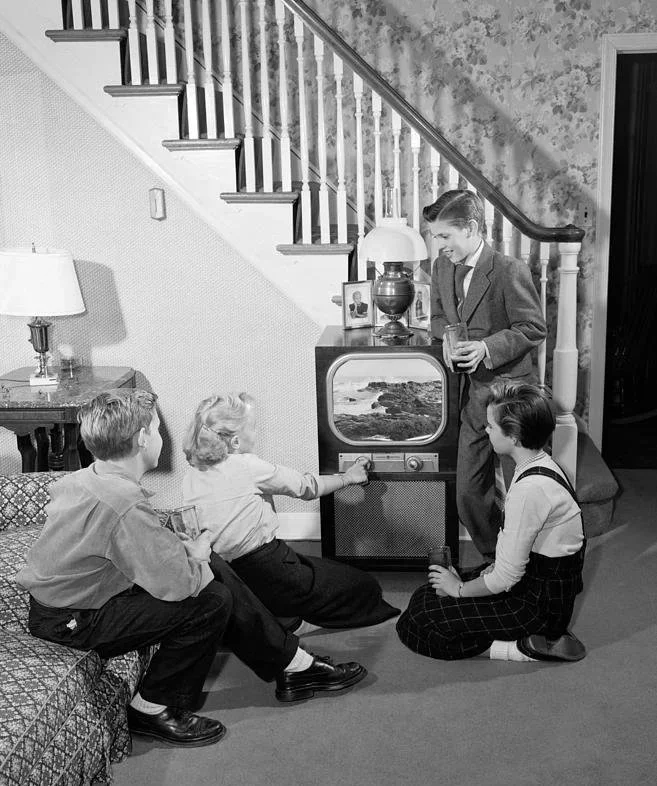
Neil Postman saw this problem writing about television in his 1985 book Amusing Ourselves to Death, before most of us had the vocabulary for it. The medium, he argued, was not neutral; it shaped not just what we consumed but how we thought, what we valued, and what we were capable of desiring. Forty years on, we are contending with something orders of magnitude more powerful, more immersive, and more intimate than broadcast television. The disorientation is not an accident or a side effect. It is structural.
At Clapham, we believe that we are made for more than this — not as a preference, but as a fact about what we are and in Whose image we are created. We are not brains in jars. We are not users with accounts. We are souls in bodies, and that embodiment is not a design flaw to be engineered around but the very core of human experience. The hunger for incarnated creative experience, for work that happened in a body, in a room, in a moment that cannot be replicated or streamed, is the yearning of our very nature, an irresistible force.
The second force driving us toward incarnated creativity is the force of rarity. Live creative experience is, by definition, unrepeatable. Every performance is a one and done. The comedian tells a joke, the musician plays a chord, the actor speaks a line: it enters the world once, never comes again. You can film it. You can stream the recording. But the event itself is gone, and everyone in that room who was present knows, in their body, the difference between having been there and watching a screen. AI can generate unlimited content. It cannot generate a live, embodied experience. The scarcity of the live, the human, the unrepeatable, rather than diminishing in the age of AI abundance, will become more precious (and desired) by the day.
These two forces together — the longing of embodied souls for incarnated experience, and the irreplaceable rarity of live creative work — are the drivers of what is coming. The market is already accommodating it and industries built around live, embodied, communal experience are booming:
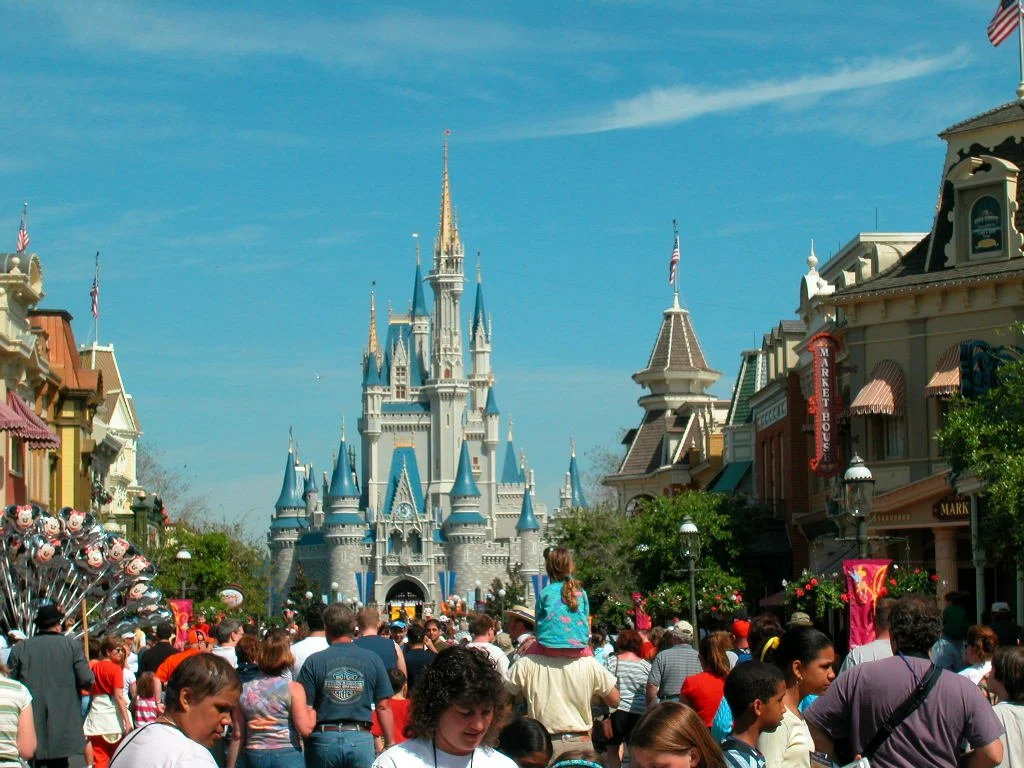
Amusement Parks. Universal Park in Orlando just expanded, and Disney World is making plans to do the same. All of their rooms are booked … all the time.
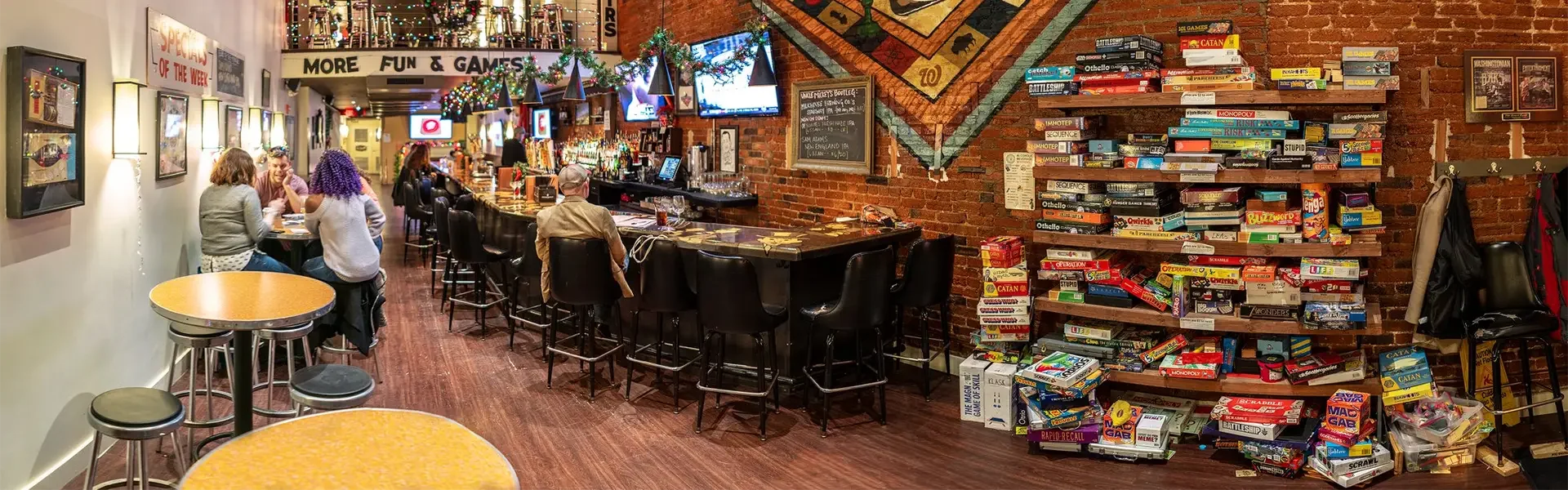
Board games. Walk into any comic, card and game store and you'll find a growing collective of people sitting across a table from each other, making eye contact, phones away, enjoying not just competition but community. The pandemic briefly interrupted it. Its return was explosive.
Escape rooms. A format that essentially did not exist fifteen years ago has become a multi-billion-dollar global industry. The entire premise is that you surrender your phone, enter a physical space, and solve problems with your body and your wits alongside real people, sometimes even strangers.
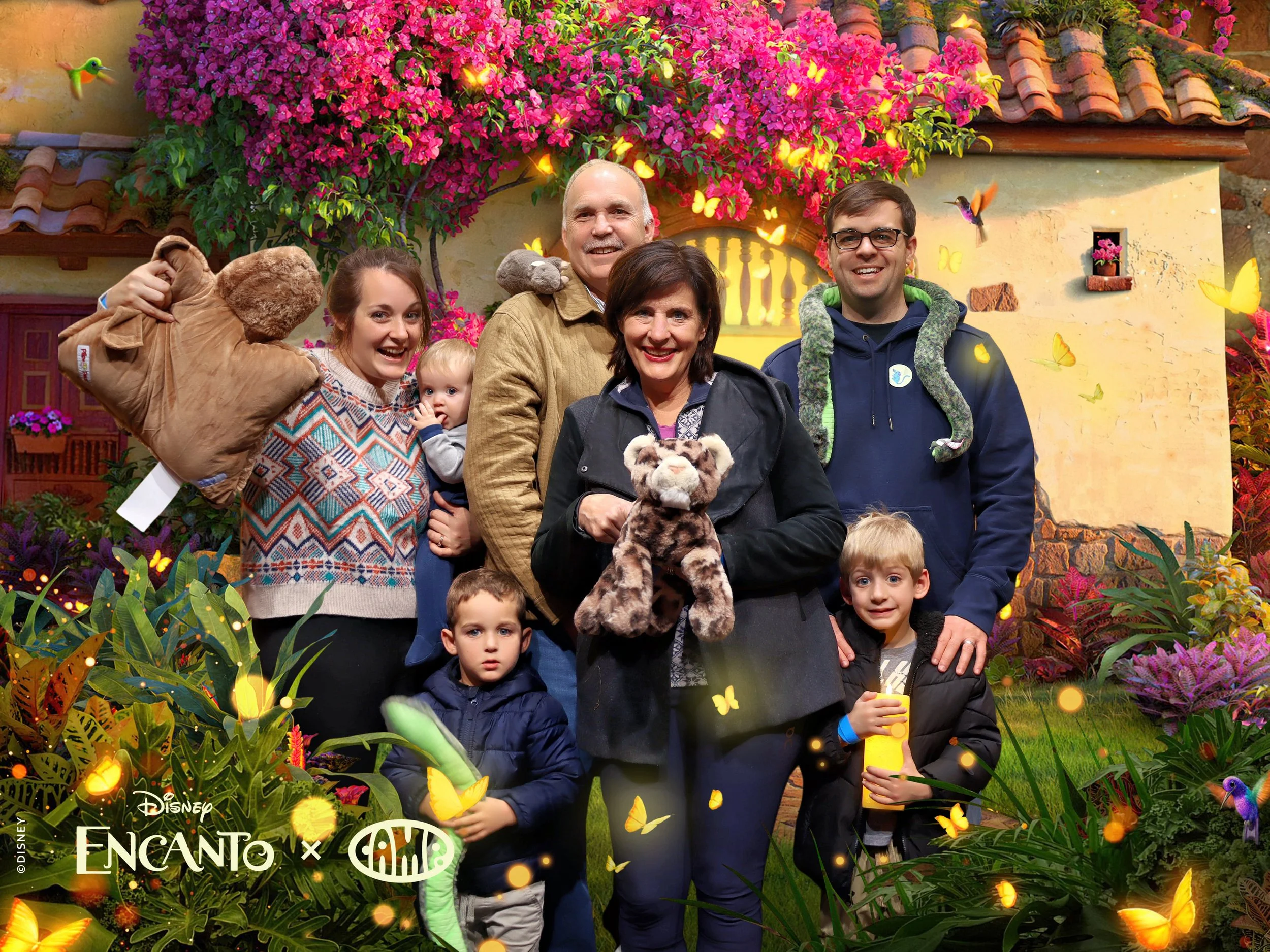
Cosplay, Renaissance fairs, themed immersive events. I'll be attending a Lord of the Rings-themed wedding in a few months. Let that land for a moment. Think The Bridgerton Experience – grown adults, in full period costume, gathering in physical community around a shared imaginative world. Or the Disney-themed pop-ups in local malls for families, like the Encanto experience we went to with our grandson.
Live music. Live Nation's projections heading into this decade are staggering. Even as streaming has flattened album economics, the live concert business has never been more robust. People will spend extraordinary money and endure extraordinary inconvenience to stand in a field or a theater together, or visit a backyard home concert by developing artists working to build a base.
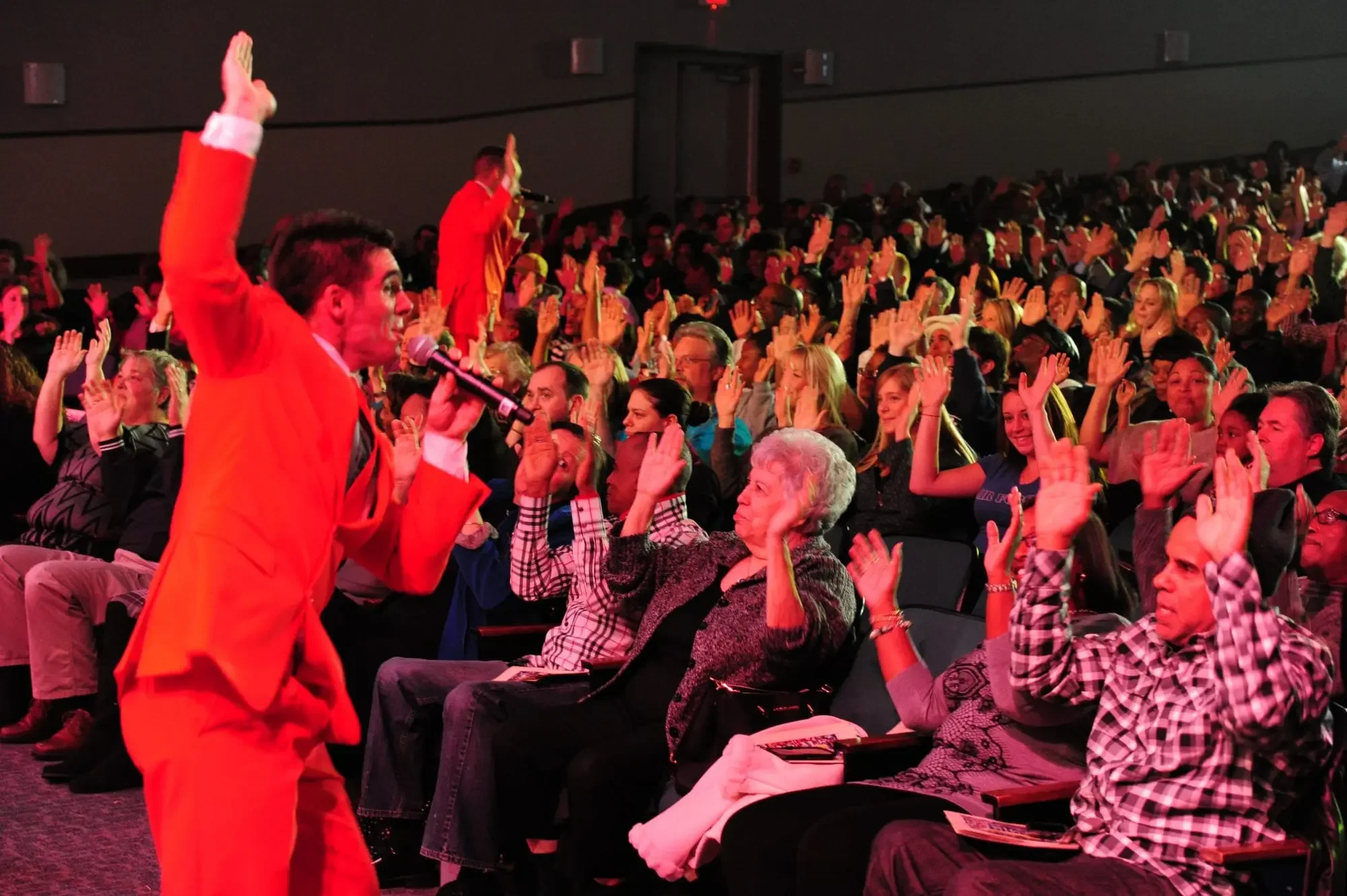
Live comedy has undergone a full renaissance. As of 2023, stand-up comedy grossed over $900 million, triple its earnings a decade before. Stand-up specials on Netflix created enormous demand for the actual live shows. Podcaster Joe Rogan promotes live comedy to his huge audience. There is something irreplaceable and contagious being in a room, laughing together, and it is growing in popularity.
These are only a few of the indicators of a growing appetite for experiences creativity, but we expect to see new content to emerge to meet the demand:
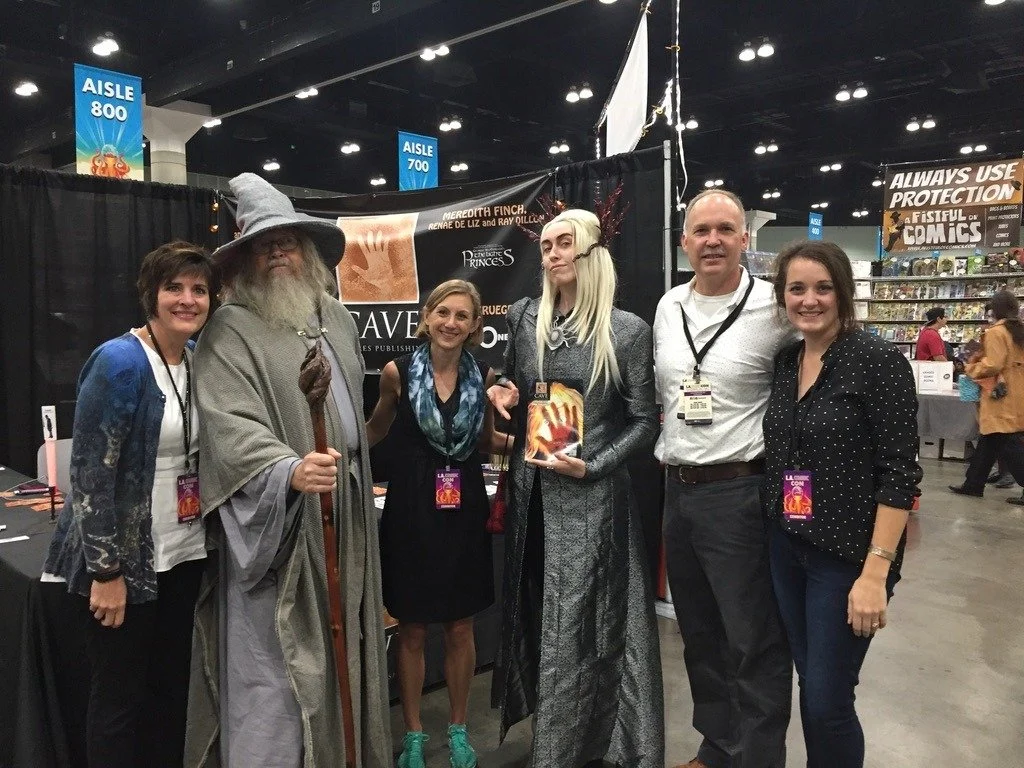
Fandom conventions will grow and deepen. The Comic-Con model is not a blip. It is a template for how communities built in digital space come to hunger for physical gathering. Our friends with Green Ember and The Chosen, for example, have created fan experiences, as have many other identity-driving brands. Expect more of them, more specialized, more experiential.
Micro-festivals will proliferate. The era of the massive corporate music festival may be plateauing, but the small, curated, place-specific festival — built around a particular genre, community, or aesthetic — is just beginning. These are popular in Europe, and people want to gather in specific places around specific things with people who share a specific passion. That desire is only growing.
Local live theater will find its audience. The community theater, the black-box experimental space, the church basement production: any place where human beings are making something unrepeatable in front of other human beings who drove ten minutes to be there.
Alternative Reality Games (ARG) will find new players. The Nine Inch Nails Year Zero campaign remains one of the most audacious examples of what's possible: a story that bled into physical reality, required real-world participation, and rewarded the kind of deep communal engagement that no passive streaming experience can replicate. A blend of geocaching, augmented reality, and a real-world escape room, ARGs are complicated and fully immersive. Like other forms of “entertainment”, AI will actually allow the creation of far more sophisticated ARGs, with dynamic, responsive narratives that adapt to players in real time, with real people, in real places, solving real “puzzles” together.
Craft and art festivals will flourish. The Etsy culture, which is really the culture of the human hand, the unique object, the thing made by someone who had a reason to make it, is not a trend. It is a correction. When the market is flooded with generated content and printed objects indistinguishable from each other, the handmade thing becomes precious in a way that no algorithm can reproduce.
We are standing at a threshold: two forces converging at once, pointing in the same direction. On one side, AI is flooding the world with generated content; on the other, embodied souls who have been digitally mediated yearn to experience creativity in community. And to add to the felt need, the polarization of digitally mediated content will further whet our appetite to be with people whom we can know and who can know us.
The Renaissance of the Real is not a rejection of technology. It is a course correction offered by our very nature: creatures who are made for more than screens, who need to be in rooms together, who require the unrepeatable, who long to look at something and know that a human hand made it, and that it will never happen exactly this way again.
So God created mankind in his own image, in the image of God he created them; male and female he created them. – Genesis 1:27