
Fatherhood: A Love That Lays Itself Down
I only became a baseball fan through my wife, who converted me to the Phillies brotherhood (you can write your grievances to me, not her!), but the game has given me language for the hardest season of our lives. I've learned that hitters talk about the two-strike approach: when the count is against you, you go after the next pitch. What you don't want to do is be too passive and take a strike.
Less than six months into our marriage, Julia and I were down two strikes. Back-to-back miscarriages, in the span of a few months. Grief worked on each of us in its own mysterious way. Mine looked stoic from the outside, but inside I was filled with confusion, helplessness, guilt running in both directions, and a loneliness I hadn’t seen coming. I had no easy answers for my bride. Should we name these souls whose bodies never fully formed? Did the people around us see the weight of what had rocked our world?
What I learned standing in that count is the closest thing I have to a thesis about fatherhood: the deepest call on my life is a love that lays itself down, and I have been learning it imperfectly ever since. My role was first comforter. And then I had to step back into the box — to accept that should a third pregnancy come, we would be brave together, handing it all over to the One who calls Himself Father over His image-bearing children.
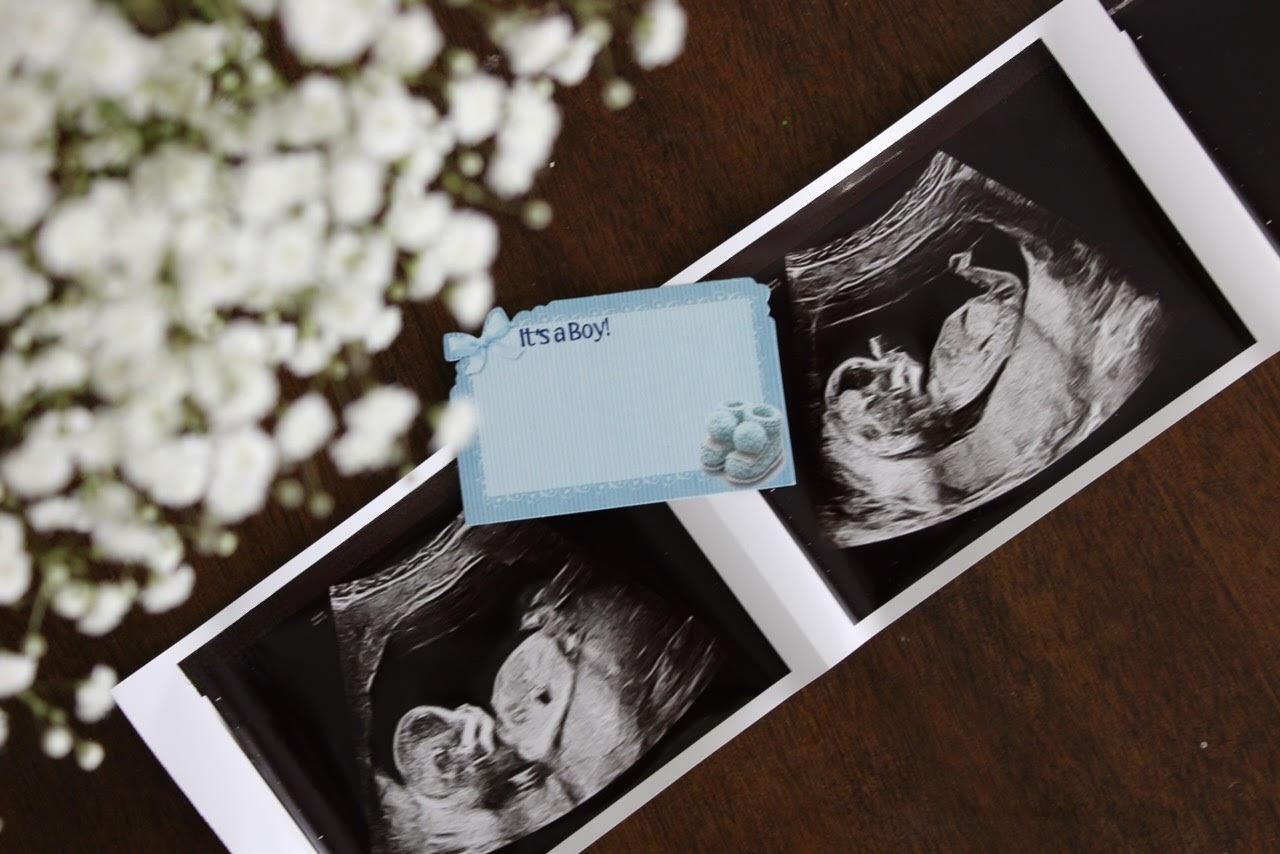
The Markgraaff’s Ultrasound!
As I write this, Julia is carrying our son, healthily growing and heartily kicking. Fatherhood, I’m learning, doesn’t begin at a due date. It began in the losses, and the mantle was picked up again at our son’s first ultrasound, when, braced for bad news, we finally heard something good. Relief filled the room. So I am preparing — not by sharpening my dad jokes (which are apparent), but by trying to become the kind of man this moment asks me to be: present, attentive, and unwilling to leave the hardest things for Julia to carry alone.
Look closely at Father’s Day. Like Mother’s Day, the apostrophe is singular and possessive: this is the father’s day, to own and to celebrate. But the singular is deceptive. Grammar, it turns out, is generous — the day belongs to every man who has taken up the work, whether or not a child carries his name or his blood. That is worth celebrating, and worth imploring: if you are a man, you have a father’s role to play in someone’s life and in your community. I’ve found this nowhere more clearly than in the giants who never had biological children of their own and fathered anyway.
I was recently at Hershey Park for a PA250 concert and, while in line for the free chocolate tour, read Milton Hershey’s story. Milton and his wife Catherine could not have children, and so they built a home and school for orphaned boys, many of whom had lost their own fathers. John Wesley never had children, yet poured his life into the nurture of a generation, convinced that educating the young was inextricably linked to the bettering of society. George Washington raised another man’s children and grandchildren and is remembered as the father of the nation.
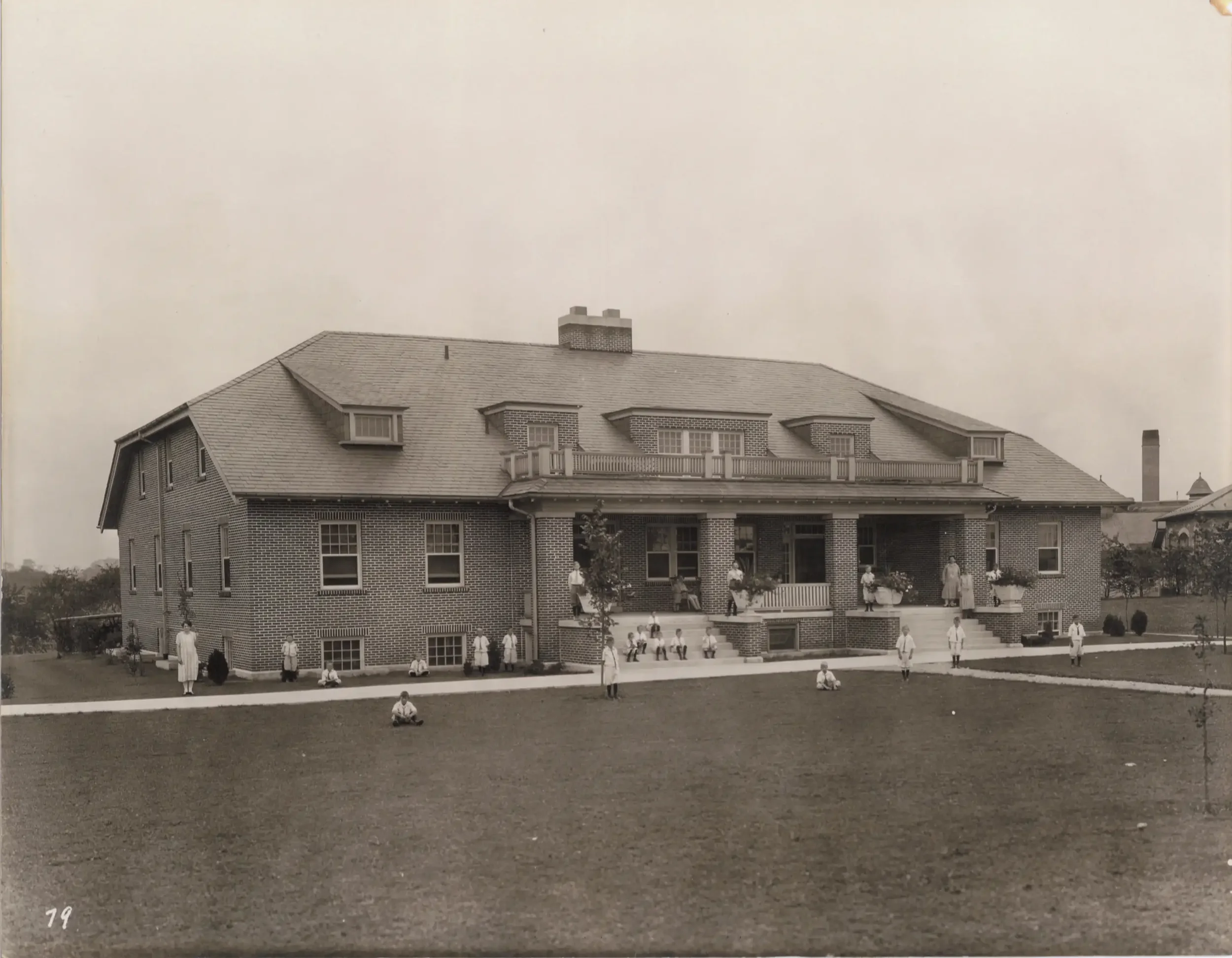
Milton Hershey School
And then there’s Chip, a gunslinging cowboy who worships one row ahead of us every Sunday. Wounded and battle-hardened by the curveballs of life — he and his wife endured a series of miscarriages and a stillbirth — he knows firsthand the confusion we’ve walked through, and he sees straight into my apprehension. He regularly checks in by phone, every call imbued with prayer. In this way he has become a spiritual father to me. I plan to call him this Father’s Day to tell him so, and to finally take him up on a trip to the range. As a cowboy, he carries the complicated weight of manhood: the man who takes the hero’s role and expects no applause for it. And none of this, not one iota, diminishes the remarkable job my own dad did raising his three sons. If anything, it confirms it: father-figures don’t compete. They all have a unique role to play. Paul writes in 1 Corinthians 4:15, “for though you have countless guides in Christ, you do not have many fathers.” I am blessed to have both.
Scripture has its own phrase for the kind of unwatched work that fathers do daily: we are “surrounded by so great a cloud of witnesses.” (Heb 12:1) There may be no award for the man who simply shows up, but there is an audience all the same. The Father who, as Jesus put it, “sees in secret” misses nothing done in the quiet of a home. There was never a trophy for this kind of work, and there was never meant to be.
Which brings me to the most important thing I’ve come to believe about a father’s work, which begins before the child is even born. It starts with being tender and loving to the child’s mother.

The numbers are worse than most fathers know. America has the highest rate of maternal death of any wealthy nation, and it has doubled over the past forty years. More than half of those deaths happen after the baby is born, in the very weeks we assume the danger has passed. The CDC estimates that roughly 87% of pregnancy-related deaths are preventable. Many are losses someone might have caught, and often the person best positioned to catch them is a husband who is paying attention. A mother will put her own needs last for the sake of everyone under her roof. A father can make sure those needs are met anyway, and that she isn’t carrying them alone.
The most concrete form of laying down my life that I’ve found is an unglamorous one. I’m in something like bootcamp right now, learning the warning signs of preeclampsia and of postpartum depression, anxiety, and psychosis ahead of our November due date, so that I can be a first line of defense rather than a bystander who didn’t know what he was looking at.
Paul’s letter to a young church in Ephesus tells husbands to love their wives “as Christ loved the church and gave himself up for her.” Giving yourself up for someone, it turns out, looks less like a grand gesture than like reading the symptom list, going to the appointments, listening closely, and staying awake to the danger she’s too exhausted or too brave to name.
So this is where I’ve landed: a few months out, with a son due this November, and years from where we began. I am an imperfect man being slowly made into a father, waiting on a son who is himself an unfinished miracle — knit together cell by cell and already so loved.
If this Father’s Day you want to do something with whatever I’ve stirred up, here are two things. Call the man who invested in you without applause and tell him you noticed — your father, if that relationship is a gift– and if it isn’t, the mentor, coach, pastor, or friend who fathered you in the ways that counted. And then look to the mothers around you, because caring for them is how a community fathers a generation. At Clapham, we’re working to build awareness about America’s maternal health and mortality crisis. Over 30 faith leaders from across the country have joined us at healthymomsfaithfullysupported.org to share what our faith communities can do to meet this moment. The bravest thing a man can do is lay himself down for the people he loves — quietly, daily, with no great applause. This Father’s Day, I am not yet holding my son, but I am already his father. And I am, by grace, learning the only heroism that has ever really mattered: the kind no one claps for.