Does the F-Bomb Still Shock and Awe?
The dumber I behave, the richer I get.
-- Jeffrey Wright as Thelonious 'Monk' Ellison in American Fiction
In the film American Fiction a frustrated novelist tries to sabotage his own book deal by demanding the publishers change his title to a single word … the F-Bomb. It’s meant to be the final provocation, a proposal so outrageous that even the cultural gatekeepers will recoil. Instead, they shrug and agree. The culture doesn’t flinch. The shock doesn’t shock. It yawns. The scene is played for comedy, but it is of course social commentary which more than ever needs to be elevated.
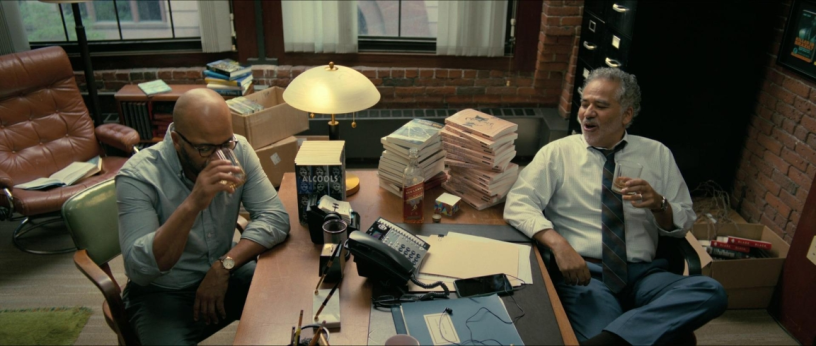
Scene from the film, American Fiction, of Thelonious changing the title of his book.
Last year, Democrat Rep. Jasmine Crockett responded to the President’s address to Congress by telling her audience to “wake me the [expletive] up.” DNC Vice Chairman David Hogg reacted to a policy story by posting “What the [expletive]?” on social media. Democratic campaign committees began deliberately deploying the F-bomb in fundraising appeals, calculating that vulgarity signals authenticity to a frustrated base. Vice President Vance called a podcast host a “dips—” and joked that anyone who said they liked turkey was “full of s—.” And then, on Easter Sunday morning the President of the United States opened the day not with a message of resurrection but with a profanity-laced threat on social media, complete with an F-bomb directed at Iran. The reaction from most of his supporters was, at best, embarrassed silence and, at worst, celebration. As The Week observed, a “volley of vulgarities” now characterizes our political environment on both sides. The coarsening of our public language is no longer a partisan problem. It is a bipartisan race to the bottom. As Peggy Noonan wrote: “They constituted hitting a new bottom, a new and infernal, face-lit-by-flames bottom, in world communications.”
And tragically, the culture yawns.
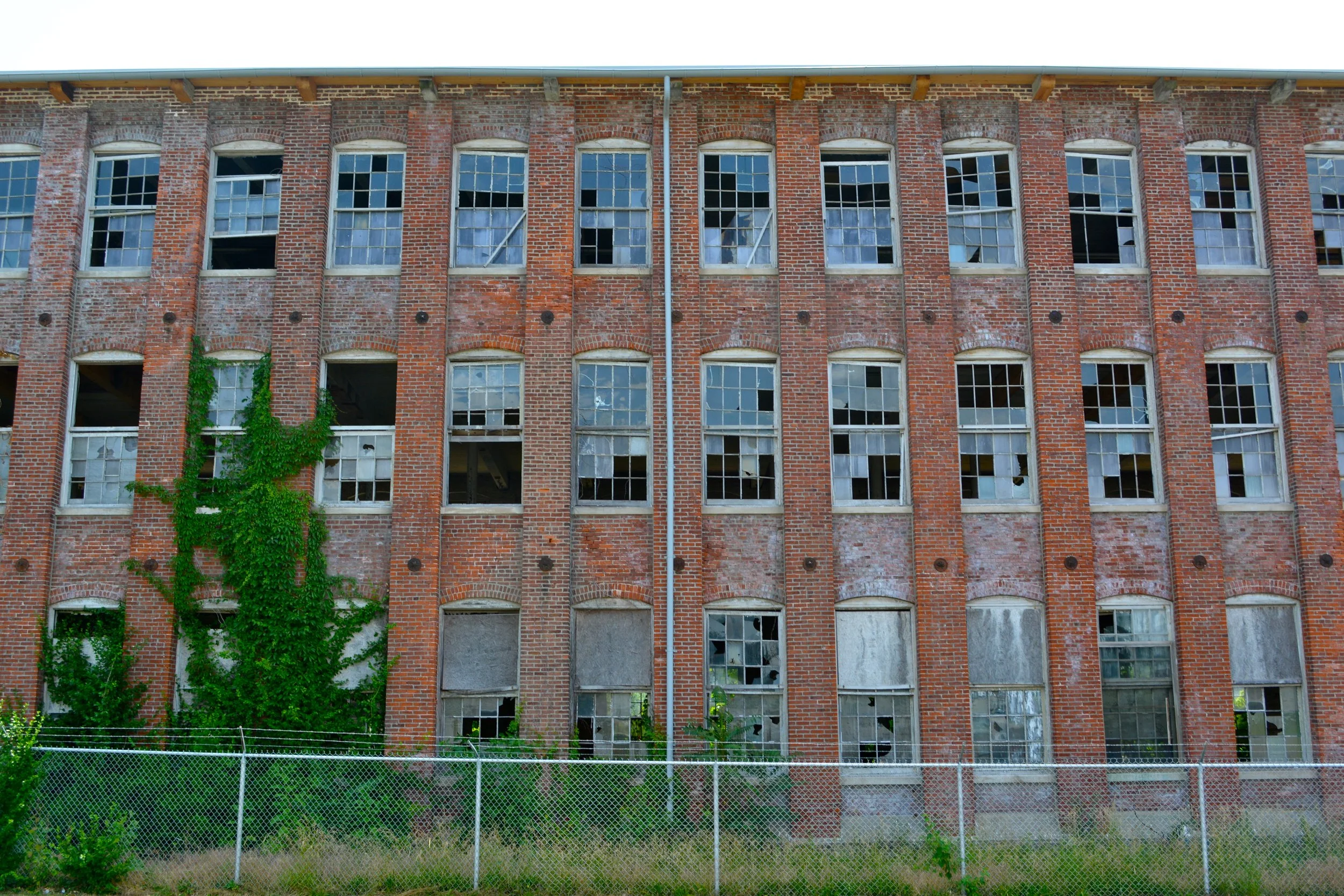
I’ve been thinking about this through the lens of something I wrote about in our recent article, “Disney Cruise and Positive Virtue Signaling,” where I explored James Q. Wilson’s broken windows theory as a framework for understanding how culture is shaped not primarily through argument but through the accumulated weight of visible signals. A repaired window tells the neighborhood that someone cares, that standards apply there. A broken one shouts that no one is watching and that nothing matters. The theory is usually applied to crime and urban decay, but its logic runs into the language of our leaders, the tone of our institutions, and the manners of our public life.
If broken windows theory explains how order is maintained, it also explains how disorder spreads. And right now, the windows of our public discourse are shattered.
I have watched, over the past several years, the use of aggressive language, name-calling, and profanity become not merely accepted but expected across the political spectrum. The right, my tribe, has embraced the political tactics of the UFC, and the left’s strategists openly argue that profanity is the path back to working-class authenticity. Social media, of course, rewards this escalation. Outrage is the bitcoin of the digital realm, and outrageous language is not just permissible there, it is incentivized. The algorithm doesn’t care about decorum, it cares about engagement.
I was saddened recently to read a post from a friend I admire in the conservative pro-family movement and then scroll down to see his liberal (pardon the pun) use of the same word the President chose for Easter morning. This is a man who would never speak that way in a church foyer or at a dinner party (I hope). But online, in the arena where the broken windows are most visible to the most people, the standards have simply dissolved.
This brings me back to a conviction that has shaped much of our work at The Clapham Group: manners are morality. Not in the sense of which order the silverware is set at dinner, but in the deeper sense that Wilberforce and Hannah More understood, that manners are, at their core, the Golden Rule. Manners are about loving your neighbor. The way we speak to and about one another shapes the moral texture of a society. When we are desensitized to language that degrades, we become desensitized to the degradation of persons. The line from coarse speech to dehumanization is shorter than we like to think.
Hannah More, whose work we explored in our post “A Little Bit of Our History”, wrote that reformation must begin with the aristocracy, because their example is the fountain from which the greater public draws their habits and character. Our elites, in all sectors, are our teachers whether they intend to be or not. The way they behave has an effect on the culture as a whole. When they model vulgarity rather than virtue, they replace persuasion with profanity, and the message they send is that decorum is for suckers and restraint is weakness. Is this the message we want to send to our society and, even worse, to our children?
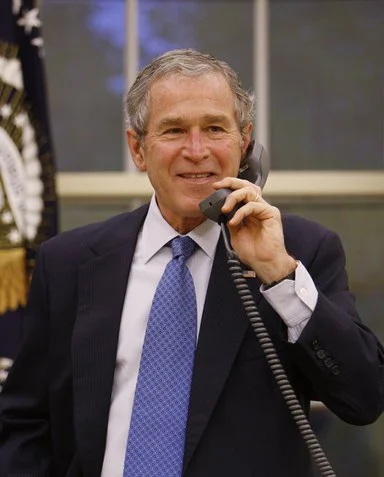
When George W. Bush came into office after the scandals of the Clinton years, he took seriously the idea that the presidency carried an inherent dignity that is fitting for the office, no matter who is in it. He demanded proper dress and formality in the West Wing. I organized a retreat at Williamsburg in January of 2001 at which he made his first appearance before Republican House and Senate members. The cochairs of the retreat – my boss, Senator Rick Santorum, and Congressman J.C. Watts – showed up in casual clothes, and President Bush called them out for it gently, with a smile, and yet still very seriously. He understood that the decorum of the office (and literally the Oval Office) had to be restored, and was instinctively embracing what More articulated in her writing: that visible standards, consistently maintained, are how institutions communicate what they value. I also remember, with some chagrin, the time my phone went off in the Cabinet Room during a meeting with the President and the House and Senate Republican leadership. Another rule of decorum was broken, and I got a look from him as well. Small lapses, publicly noticed. That’s how norms are either reinforced or eroded. I never left my phone on during a meeting like that again.
Judith Martin, better known as Miss Manners, argued in Miss Manners Rescues Civilization, a book I read while on the Hill, that manners exist not to oppress but to protect. Civility is the scaffolding that allows a diverse society to function without constant conflict. When we abandon it, we don’t liberate ourselves we simply remove the guardrails that make it possible to disagree without destroying one another. We could use a fresh reading of that argument today.
In their efforts to reform society Wilberforce and More prioritized repairing the cultural windows that society looks at. They worked to reestablish cultural norms of decorum that do not yawn, but flinch at and disesteem bad behavior that shape society even when private hearts remain imperfect. This is not a call for pretense. It is an acknowledgment that visible standards have real consequences. The broken windows must be repaired by those whose houses tell the neighborhood that we have abandoned authentic good form.
This is also an argument in defense of shame, a concept deeply out of fashion but no less necessary. I am not referring to the toxic shame that destroys people. I am referring to the feeling of remorse or embarrassment at bad behavior, spurred on by societal cues that certain behaviors are beneath us. We need not abandon our morals for the sake of comfort. When we laugh at vulgarity from our own tribe’s leaders, when we share the profane post because it “owns” the other side, we are signaling to everyone watching that this is what strength looks like, that this is how men and women of conviction speak. We are emboldening the bully.
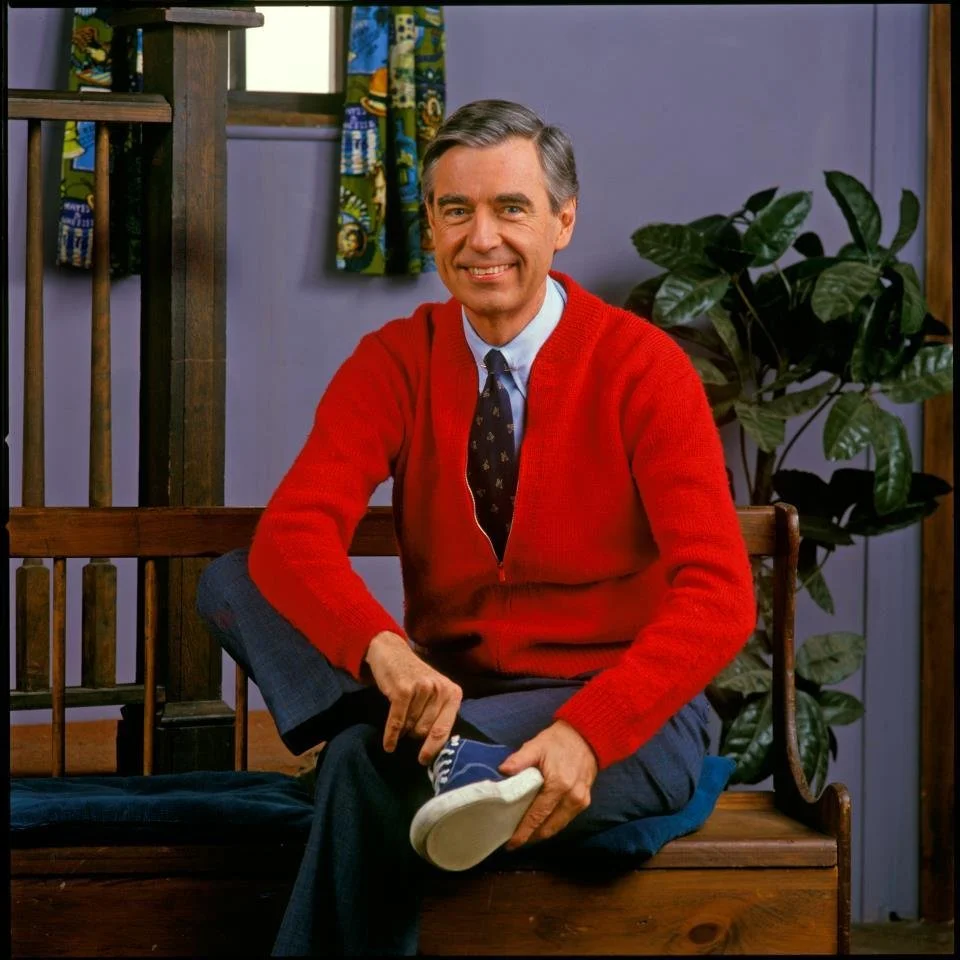
I think of a lunch I had years ago in the Senate dining room with Fred Rogers, who affirmed with uncharacteristic passion the original Clapham Group’s efforts to “make goodness fashionable.” Not imposing goodness. Not legislating it, but making it attractive:
Let's take the gauntlet and make goodness attractive in this so-called next millennium. That's the real job that we have. I'm not talking about Pollyanna-ish kind of stuff. I'm talking about down-to-Earth actual goodness. People caring for each other in a myriad of ways rather than people knocking each other off all the time...What changes the world? The only thing that ever really changes the world is when somebody gets the idea that love can abound and can be shared.
― Fred Rogers, Mister Rogers - Won't You Be My Neighbor
Not long after that, I organized a series of readings on the Clapham Group’s reformation of manners. This motivated me to host the historian and scholar, Gertrude Himmelfarb, for a breakfast with members of the Senate to talk about her book, The De-moralization of Society, and the fact that manners matter as much as words.
Virtue, as we’ve written, is caught, not just taught. It is transmitted through what people see modeled by those they admire. If what they see modeled is coarseness, contempt, and profanity, from the left and the right alike, then that is what they will catch. As we argued in our piece on the Super Bowl wedding: what gets celebrated gets repeated, and what gets normalized gets replicated.
So how do we repair these particular broken windows?
Perhaps what truly shocks now, and what might actually be countercultural, is the non-use of bad language. Perhaps the radical act is the refusal to laugh along when someone on your own team demeans another person, the quiet unwillingness to share the clever post that degrades rather than persuades, the decision to hold your own tribe to the same standard you’d hold the opposition. We need more carrots and fewer sticks, as I wrote in the Disney Cruise piece, but we also need the courage to call in our friends before we call out our enemies.
It is always easier to call out those across the aisle than to correct those in our own pew. I know Franklin Graham has encouraged President Trump to check his language. But this is a challenge to us all. If we believe that culture is shaped from the top down and the inside out — and if we believe that the broken windows of our language are contributing to the coarsening of everything else — then the work begins with the people we actually have influence over. Starting with ourselves.
Making goodness fashionable again may be the most subversive act available to us to repair the windows of our society to a healthy state of mutual respect and civility. In doing so, we may just leave the neighborhood a better place for our children to live in.
“Better is open rebuke than hidden love. Faithful are the wounds of a friend.” – Proverbs 27:5–6