
Clapham’s 2026 Summer Viewing Guide
“Attention,” as Mary Oliver wrote, “is the beginning of devotion,” and it’s been in short supply this summer. Between a World Cup that took over living rooms across the United States and the world, and a 250th birthday party that had the whole country looking both backward and forward, 2026 has pulled our focus in many directions at once. In our last blog post, Mark wrote about shared stories and what it means to find common ground amid fracture and the polarizing narratives competing for our attention.
As is our tradition, this week we’re sharing the films Clapham staff have been watching and recommending this summer. As the season winds down, these picks are an invitation to find respite in well-crafted stories that guide our attention: to good questions, to human dignity, and to the pursuit of common ground.
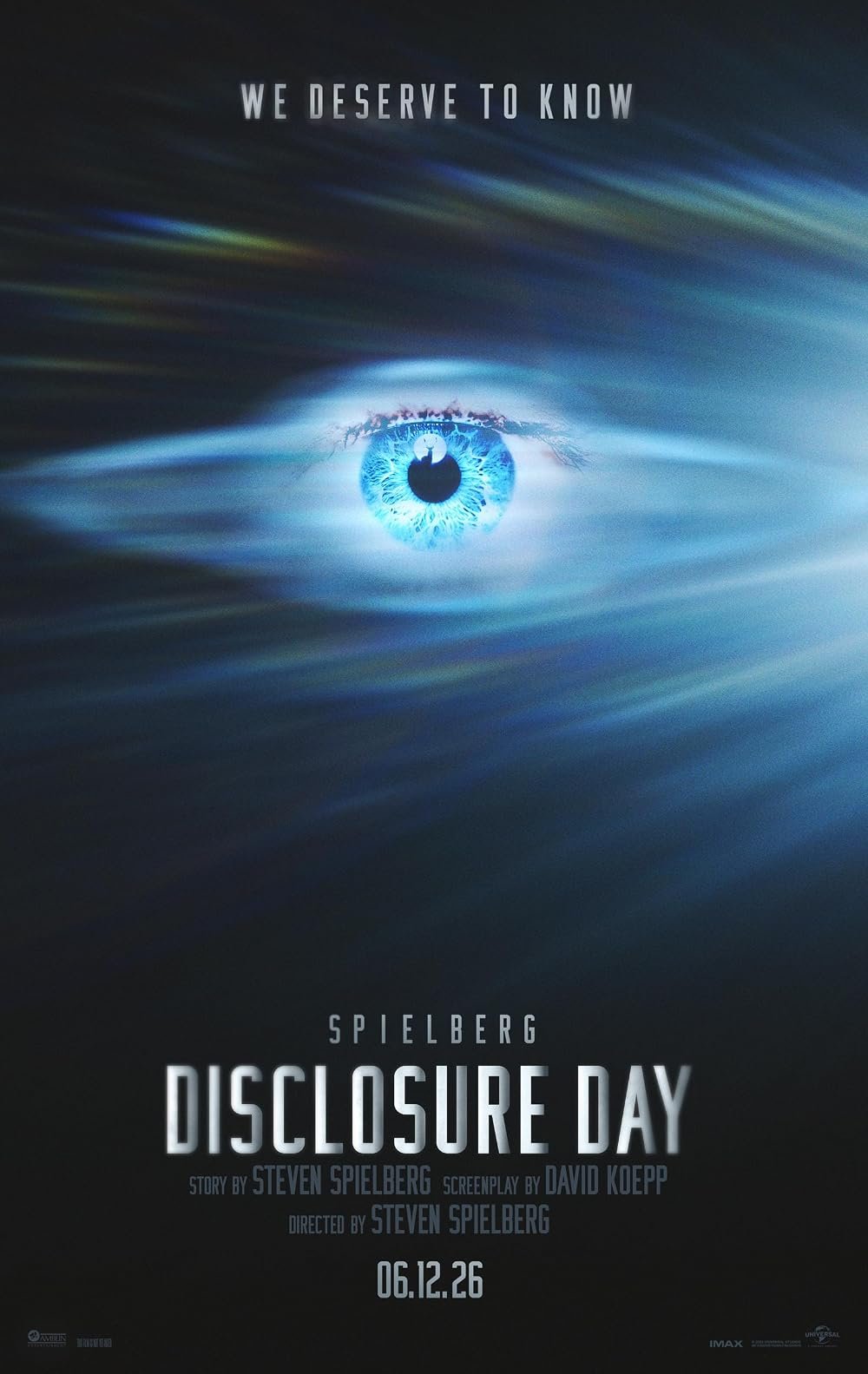
Starting with E.T. (still my favorite retro-ride in Disney), Steven Spielberg has spent over forty years using aliens to ask the biggest question there is — are we alone, and what would it mean if we weren't? Disclosure Day is the culmination of that inquiry, and it's the rare summer blockbuster ambitious enough to be both a tense first-contact thriller and, as one critic put it, a theological essay. The film wrestles with real, no-easy-answers stakes rather than settling for spectacle alone, anchored by Emily Blunt and Josh O'Connor, exploring the question Spielberg raised: "Is God, our God, only on this planet, or is God a God for every system where there’s civilization, intelligent life, and even developing life?"
Unlike a lot of films from the last two decades, it doesn't cast people of faith as fearful or closed-minded, which I've noted is a positive trend over the past several years. The film treats their religious questions with real respect, embodied in a former Catholic novitiate and her mentor who model faith as confidence rather than fear. Spielberg added: “If this truth were just known overnight, if the government announced, ‘Yes, we have been keeping this from you since 1947,’ that would mess up a lot of people. And the movie also takes the position of the church."
If you're a person of faith, you'll likely walk out with plenty to chew on. There are echoes of biblical revelation, conversion, and a God who chooses to speak rather than hide. If you're not, you'll still get a gripping, gorgeously shot Spielberg spectacle about what happens when the world's oldest question finally gets an answer. Few films this summer are built to reward both audiences at once.
- Mark Rodgers, Principal
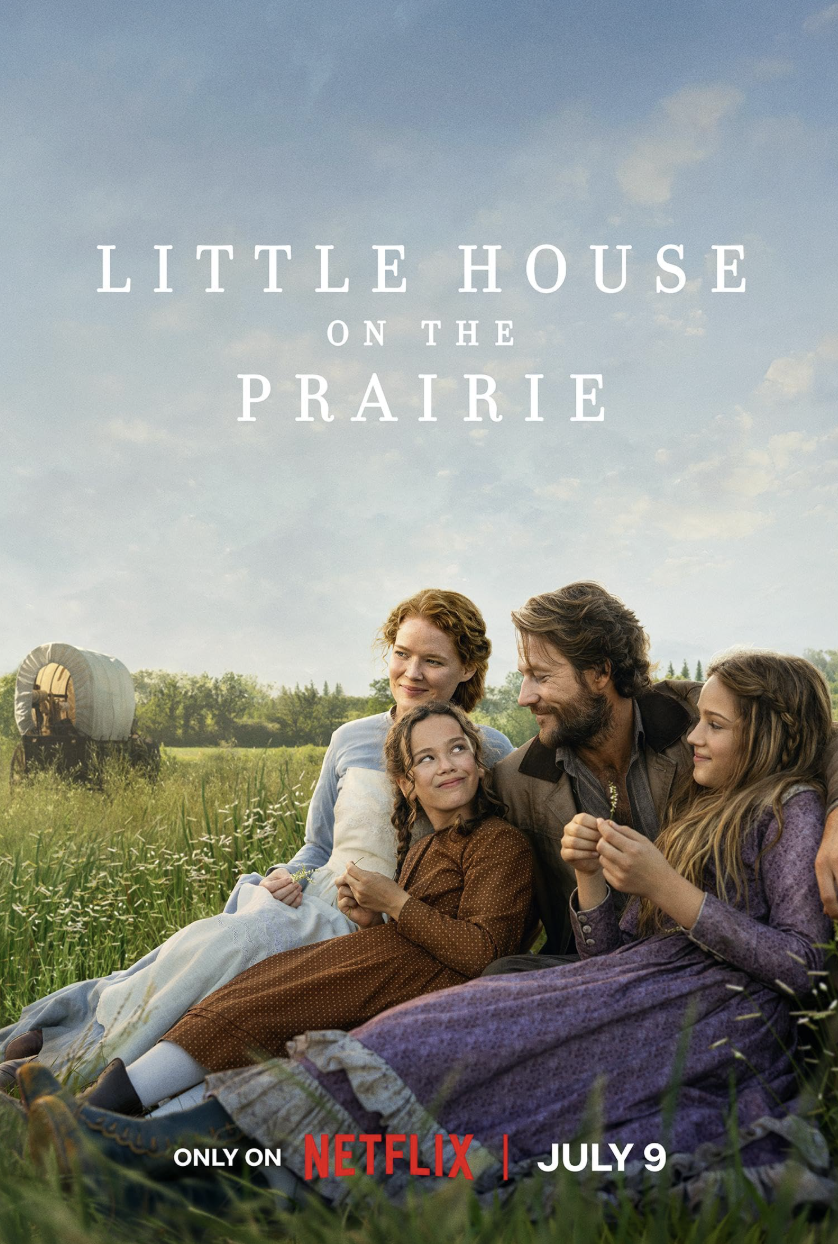
I have a very vivid memory, from when I was about four or five years old, of watching an episode of Little House on the Prairie that still haunts me to this day. Albert (a character made up for the show) smokes a pipe in the basement of the Harriet Oleson School for the Blind and it ends up burning the whole place down, killing two people, including a baby.
And though it’s also been several decades since I read one of Laura Ingalls Wilder’s Little House books, the scene where Pa’s toenail is ripped off is still the first thing I think about when someone mentions these books.
Ingalls Wilder’s work is so iconic that in Lost, another now-iconic piece of pop culture, former con-man Sawyer references the show as “Little House,” much to Kate’s amusement: “You call it Little House?”
So like probably every other Millennial/Gen Xer reviewing Netflix’s reboot of Little House on the Prairie, I came into this with some preconceived notions. And I wasn’t the only one. Warren Christie, the actor who plays John Edwards, shared, “I have two older sisters, who … were fans, but have since found out were super fans. … They were very excited.”
- Juliet Vedral, Senior Associate
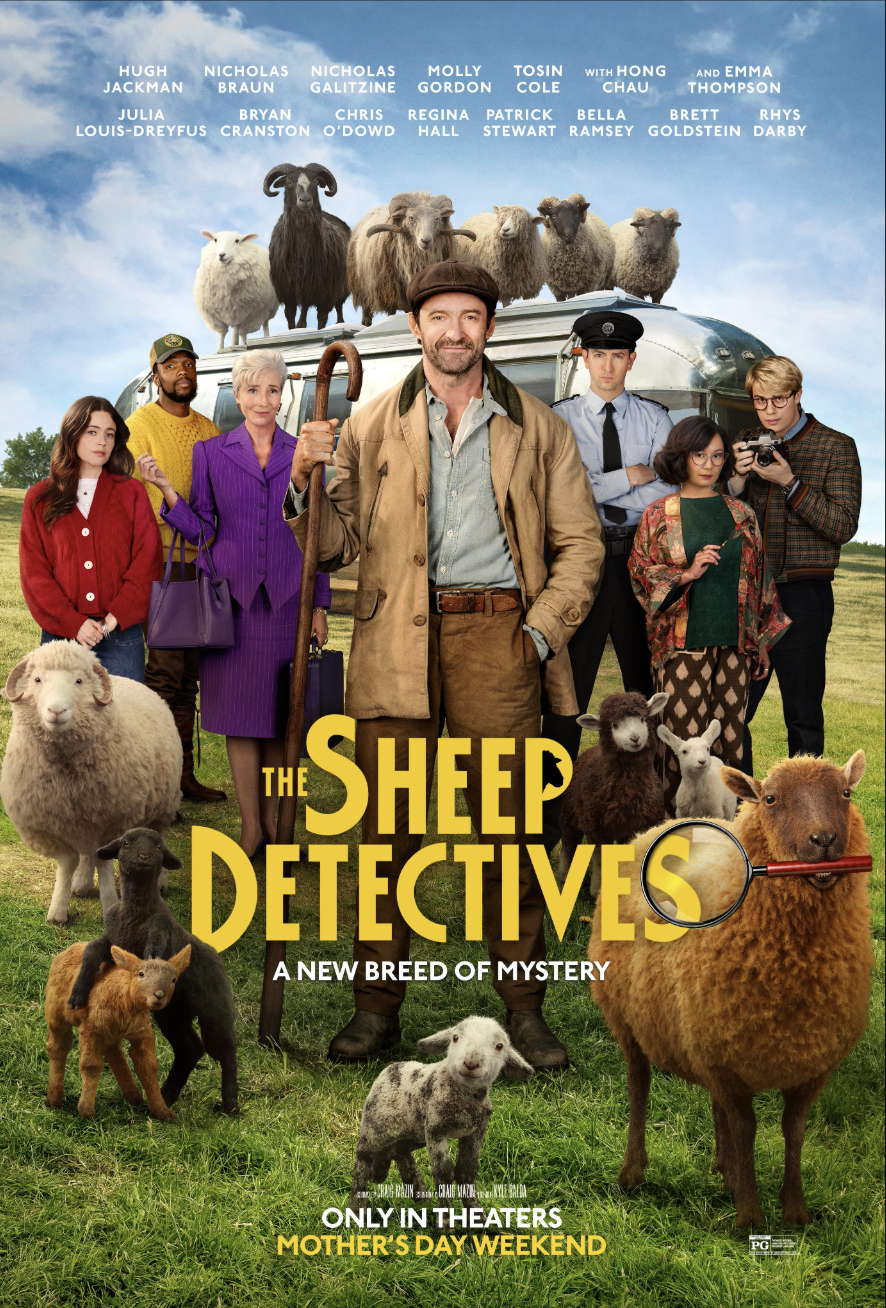
I went into The Sheep Detectives not sure what I was going to experience. It seemed like a kids’ movie but with … murder? Being a fan of mysteries set in the English countryside, I figured it was worth checking out.
What I found, besides an enjoyable and charming moviegoing experience, was a delightful film full of unexpected Christian imagery. And also, a murder mystery for all ages — well, maybe just ages eight and above.
The film is set in a small, fictional English town called Denbrook. George Hardy (Hugh Jackman) is a kind — dare I say even “good” — shepherd who “calls all his sheep by name.” Among others, there’s Lily (the smart one), Sebastian (the black sheep), Mopple (the patient sheep who never forgets), Sir Richfield (the dignified one), and Cloud (the pretty one). There is also an unnamed “winter lamb,” the outcast of the group because he was born at an unusual time. At the end of each day, George reads murder mysteries to his flock, and Lily is typically the one who solves them in the end.
- Juliet Vedral, Senior Associate
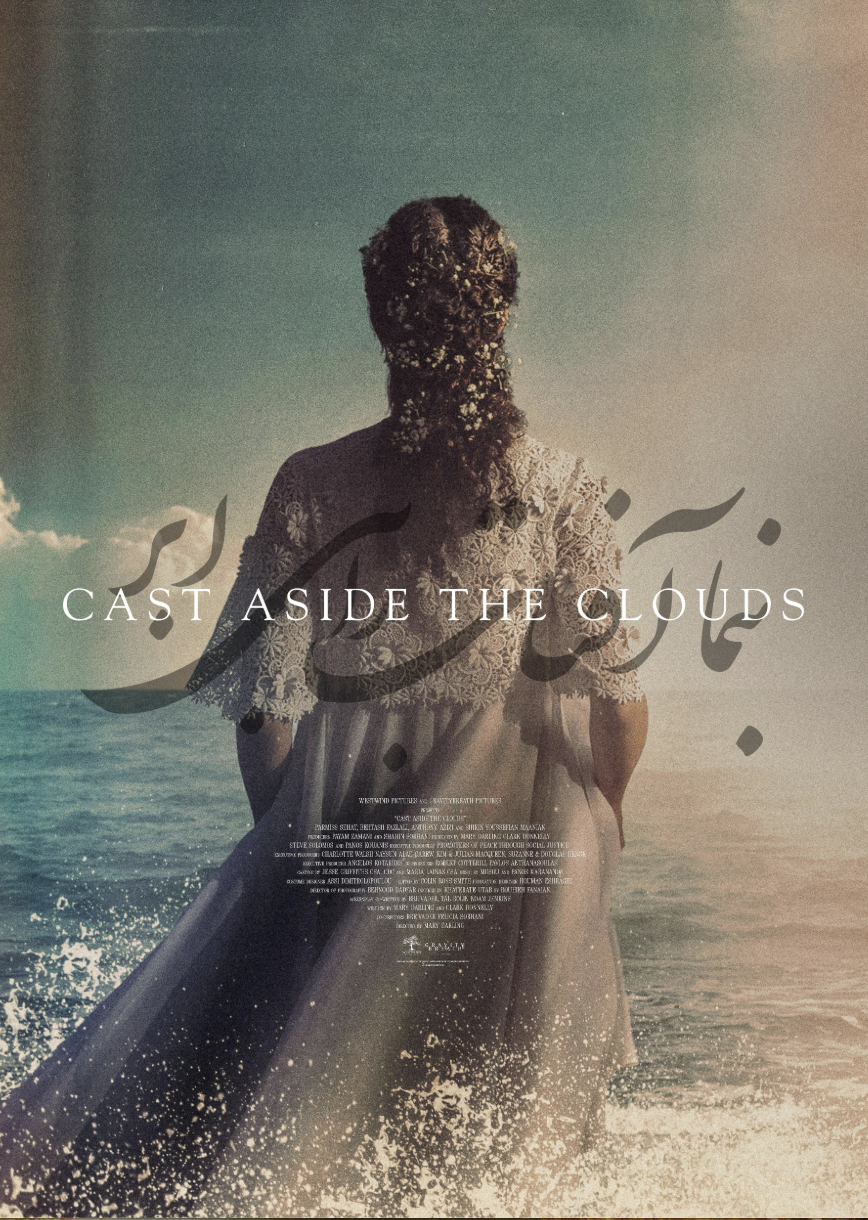
“The only thing that we have that we can actually hold onto in the most difficult circumstances is what we actually believe.” So said Mary Darling, the writer and director of the beautiful film, Cast Aside the Clouds. Set in modern-day Tehran, Cast Aside the Clouds is both a forbidden love story and a depiction of the steadfast faith of the Baha’i community amidst ongoing persecution.
The Baha’is, Iran’s largest non-Muslim minority, have been targeted for persecution in the country since 1844 and are often treated as heretics because the Baha’i Faith claims that there have been other “messengers” after Muhammad. Since the United States began bombing Iran on February 28, 2026, the Baha’i community has experienced its most intense oppression since the Islamic Revolution.
“There have been a number of people, including a couple of young men, a couple of young cousins who have recently been experiencing intense persecution, torture, and mock execution,” shared Darling, herself a Baha’i. “Anytime that there seems to be a war or something else is happening in the world, the Baha’is in Iran begin to really get it,” she explained. “They’re often threatened for being spies to Israel, spies of America, because of course the Bahai World Center is in Haifa, Israel.”
- Juliet Vedral, Senior Associate
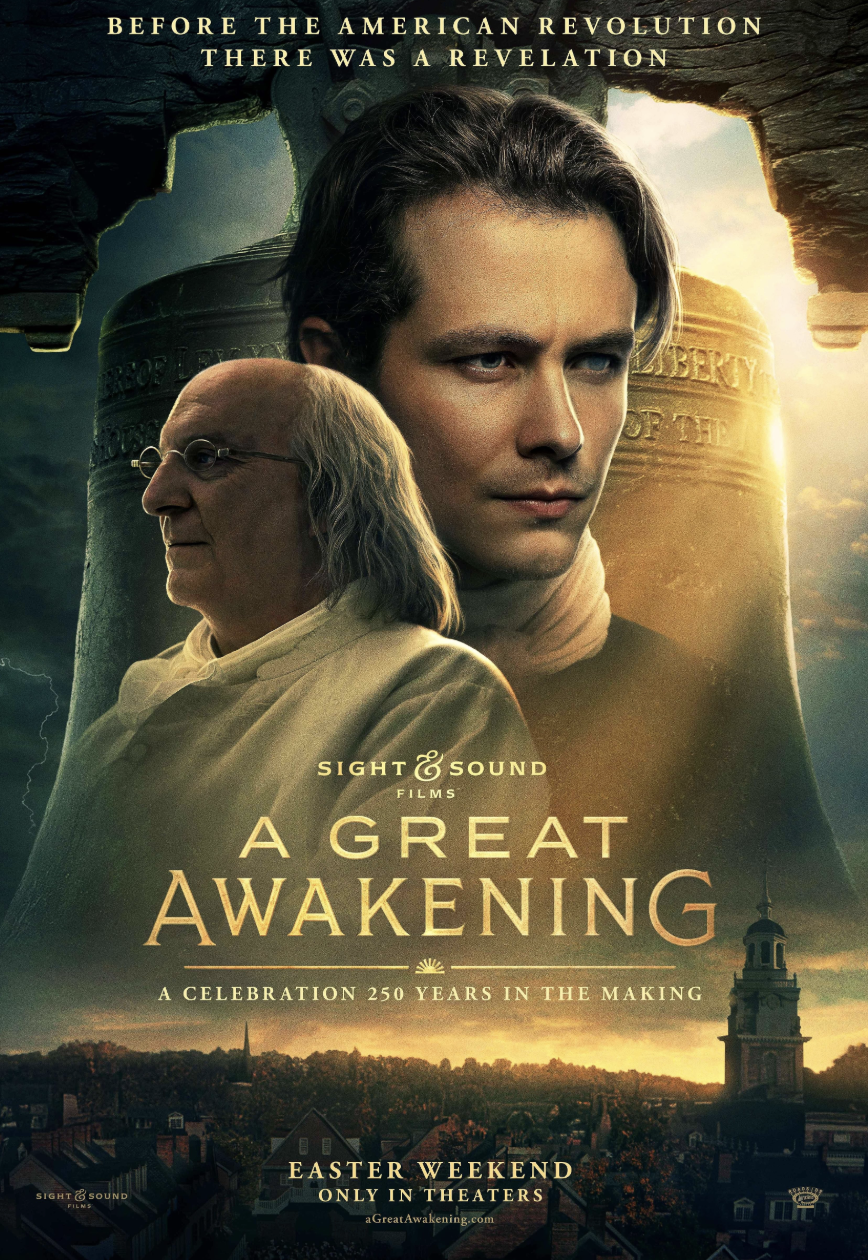
"Give me liberty, or give me death!" That line echoed in our minds this summer while visiting Colonial Williamsburg, where a terrific "Patrick Henry" reenactor made us feel, if only for a short moment, like revolutionary colonists ourselves. Upon hearing that we were a faith-based group, he shared something unexpectedly personal: as a boy, he'd stood before the great reverend George Whitefield, the famed itinerant preacher of the First Great Awakening, and it changed the course of his life as he gave his life to Christ. That moment gave new weight to something Benjamin Franklin wrote in his own autobiography, describing Philadelphia after Whitefield came to town: "It was wonderful to see the change soon made in the manners of our inhabitants. From being thoughtless or indifferent about religion, it seem'd as if all the world were growing religious, so that one could not walk thro' the town in an evening without hearing psalms sung in different families of every street."
This dynamic of an outwardly skeptical Franklin in the front seat of an ever-changing religious landscape is what the film A Great Awakening viscerally plays out. At center stage is the deep, but wary friendship between a worldly Franklin and a fiery Whitefield. The movie opens with Franklin's grandson, young "Benny," asking almost dismissively, "who is this George Whitefield?", to which the film spends the rest of its runtime having Franklin answer that question: Whitefield's preaching helped instill the self-reliance and moral seriousness that would later fuel the Revolution. Critics have flagged some dramatic license, such as sound design that leans hard into making Whitefield's voice feel otherworldly, and no, he wasn't actually present for one of Franklin's kite stunts, but the film uses that invented proximity to make its real point: that Whitefield was the lightning bolt, sparking revival by divine calling, while Franklin was the rod, a more grounded, practical instrument channeling that same energy toward the nation's founding. For America's 250th, the film fills a significant gap by taking the faith dimension of the founding seriously, and it leaves the viewer with plenty to unpack with peers, congregants, and family. My wife's women's group is watching it soon, and I'm looking forward to hearing what she takes from it. Up next in our revolutionary-summer lineup:Young Washington, from another faith-adjacent studio landscape tied to our 250th. It shouldn't take a faith studio to take the faith dimension of the Revolution seriously, one would hope Hollywood may follow; though I would not bank on it!
- Jonathan Markgraaff, Associate
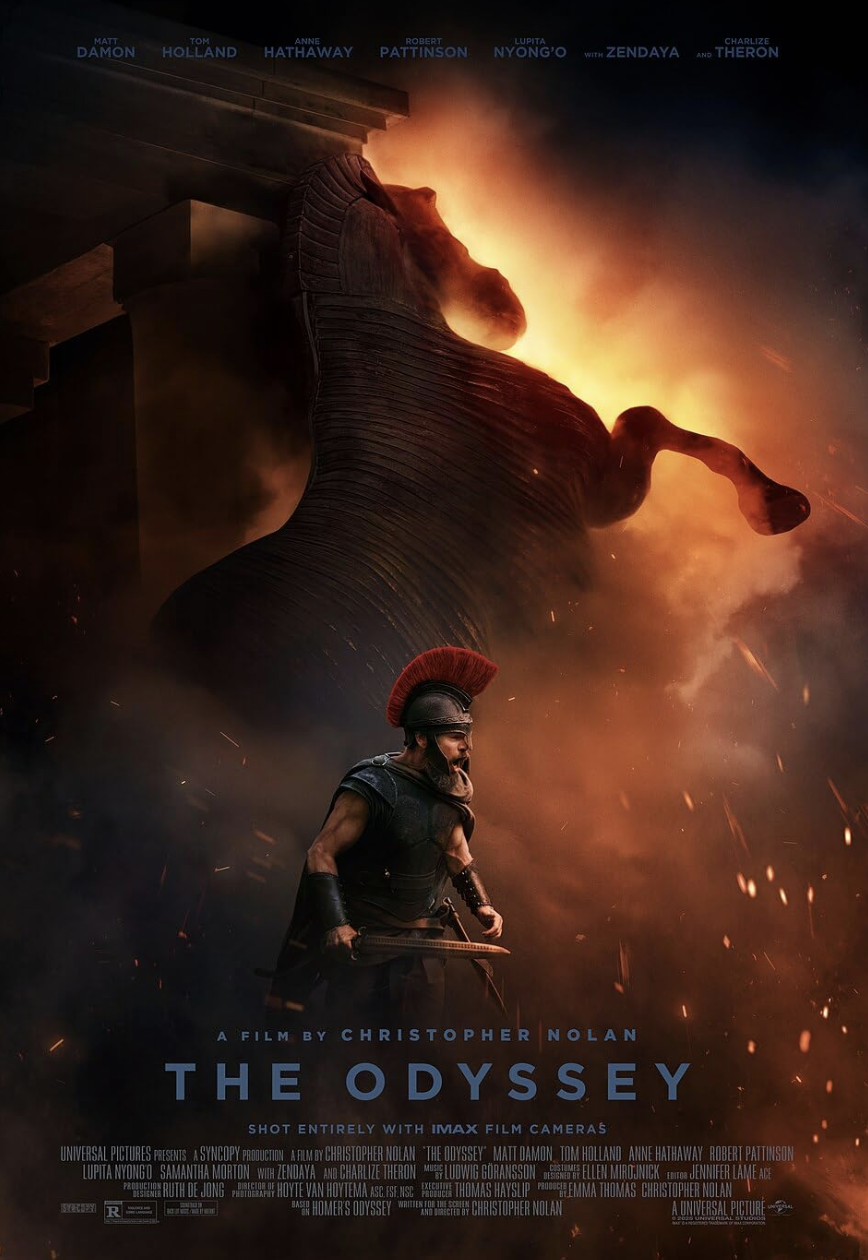
Odyssey, the poem begins, "Tell me, Muse, of the man of many ways," but our muse, Christopher Nolan, begins his instant classic scripting, "A time of apparent magic." He prepares the audience to suspend their modern preconceptions of fact, fiction, myth, and theology. His metamodern visual masterpiece weaves transcendent truths into corrupted conflicts interrelationally and geopolitically. He entertains the audience while synthesizing individual hope and mythological fatalism.
Nolan creates the film by adapting the ancient story and films it without using any computer graphics. The star studded assemble is impressive. They are diverse, unlike the people of Ancient Greece. But Nolan is retelling truths that transcend time and race. He continues his tale from Oppenheimer, replacing the atomic bomb with a trojan horse. The film is a trip and worthy of your full attention.
- Nace Lanier, Clapham Vicar

It seems that every generation gets a slightly different Spider-Man, adapted to address our specific context. In the midst of social fragmentation and polarization, and a general lack of trust, this Gen-Z Spider-Man is the one asking what it looks like to steward power responsibly, and how to be an honorable leader and friend.
Spider-Man: Brand New Day is one of my favorite watches of the summer, and it stands out for three reasons. First, it's a celebration of friendship. One of the film's most powerful throughlines is the reminder that loyalty and friendship are built and earned through the work of showing up for people. Second, it takes the old line "with great power comes great responsibility" seriously, not as a gimmicky slogan but as a genuine tension, ultimately finding that power exercised well takes humility and active sacrifice, not just strength. Third, and maybe what stuck with me most, the film insists on the dignity of every person in it, including the people working against Peter. Without spoiling how, empathy is a hinge the story turns on: recognizing someone's humanity, even when it would be easier not to, is what actually moves things toward the common good.
It's an impactful, humorous, and entertaining summer film that still has something to say — a combination very much worth your time.
- Libby Maxwell, Associate & Communications Manager
We hope you enjoy!
