Finding Common Ground on Sacred Ground
"But no temple made with hands can compare with Yosemite. Every rock in its walls seems to glow with life."
— John Muir from The Yosemite
There is a particular quiet I feel when I stand in the National Cathedral. Naturalist John Muir understood this when he called Yosemite “God's cathedral,” and I felt this familiar quiet when I stood in a grove of three-thousand-year-old sequoias there.
This summer, with the help of a small grant from a foundation, my wife Leanne and I set out to retrace three nights and four days that changed the American landscape forever. We were joined by a dear friend, Jedd Medefind, and his father and daughter. Jedd's father, Maynard, spent his summers as a young father working as a park ranger in Yosemite, and Jedd grew up spending three months of every year with his parents and three brothers packed into a two-room ranger's cabin on the Valley floor. Walking these trails with these men who had, in some sense, grown up inside this cathedral added a layer of meaning we hadn't expected: their family's own quiet, three-generations-deep devotion to this place, alongside the one we'd come to study.
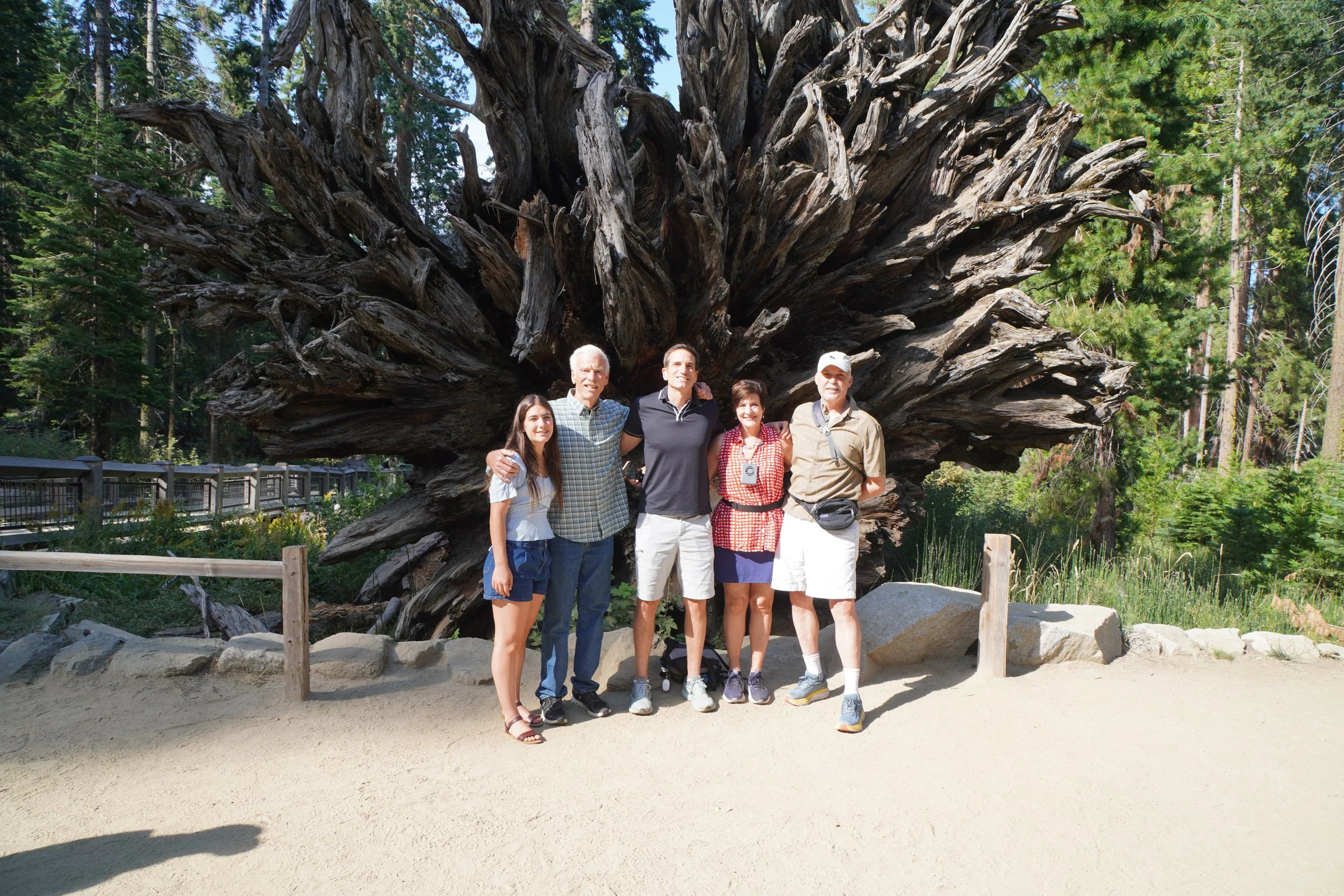
The Medefind and Rodgers families at Mariposa Grove, where Roosevelt and Muir camped their first night together.
In May 1903, President Theodore Roosevelt and the naturalist John Muir camped together across Yosemite, starting with the sequoias of Mariposa Grove, continuing through a snowbound night near Sentinel Dome, and ending in a meadow at the foot of Bridalveil Fall. We walked where they walked, and as our journey progressed, the more their historic trip served as instruction for America’s path forward.
The story of two very different men who found common ground by walking together on sacred ground is a story of compromise that ultimately led to a shared vision of flourishing land and society we still enjoy today.
Roosevelt was not, on paper, a pair for Muir. Roosevelt was a hunter, a trust-buster, a former Rough Rider who had spent his life measuring the world in terms of vigor and conquest. Muir was a Scottish-born Presbyterian who became a man of the wilderness, and who both rode an avalanche and had once strapped himself to the top of a tree during a windstorm just to feel what the tree felt.
The first night, they camped beneath the ancient sequoias in the upper Mariposa Grove, Muir on a bed of pine needles and Roosevelt on a stack of forty wool blankets. "Lying out at night under those giant Sequoias,” he later said, “was like lying in a temple built by no hand of man, a temple grander than any human architect could by any possibility build.”
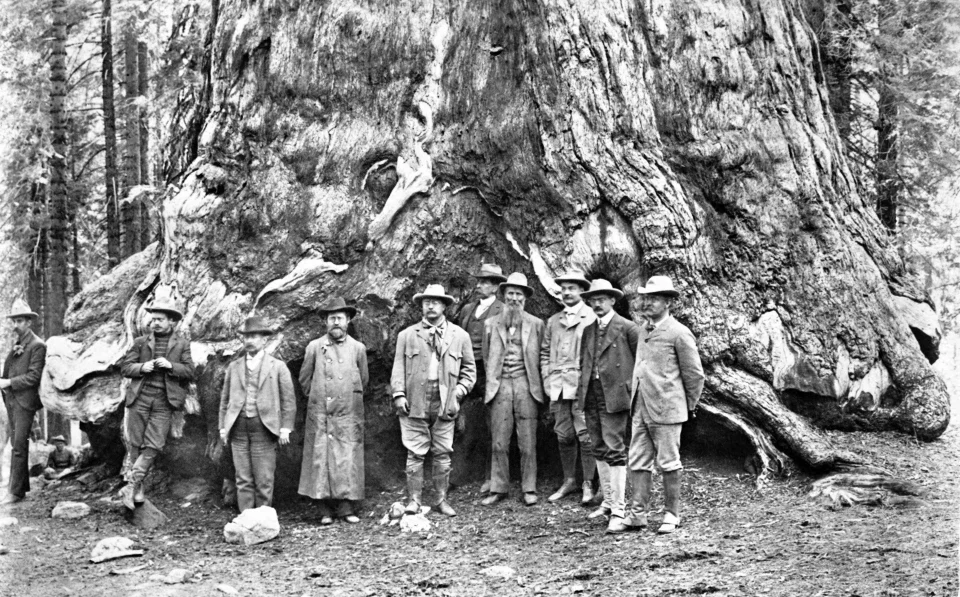
President Roosevelt and John Muir at the base of the Grizzly Giant, Mariposa Grove, May 1903. Roosevelt chose to camp here with Muir rather than stay at the Wawona Hotel. Photo: Joseph Nisbet LeConte, Yosemite NP Archives, via NPS.gov
The second night, a snowstorm dropped five inches of snow on their camp near Sentinel Dome, and rather than complain, Roosevelt reportedly declared it "bullier yet." "Just think of where I was last night,” he said. “Up there amid the pines and silver firs, in the Sierran solitude in a snowstorm. I passed one of the most pleasant nights of my life. It was so reviving to be so close to nature in this magnificent forest."
The third and final night, they camped in a meadow at the base of Bridalveil Fall, close enough to hear the water fall all night long. This was when the final negotiation took place.
Muir later admitted with some satisfaction that he had used those three nights to lobby hard. In his own words, he'd "stuffed" the president thoroughly on the subject of timber thieves and the men making a business of stripping the forests bare. Roosevelt didn't seem to mind, as he'd asked for exactly this time with Muir. Two months before the trip, he'd written to Muir with a simple, almost boyish request: he wanted no one else along, and he wanted to drop politics absolutely for four days, just to be out in the open with Muir.
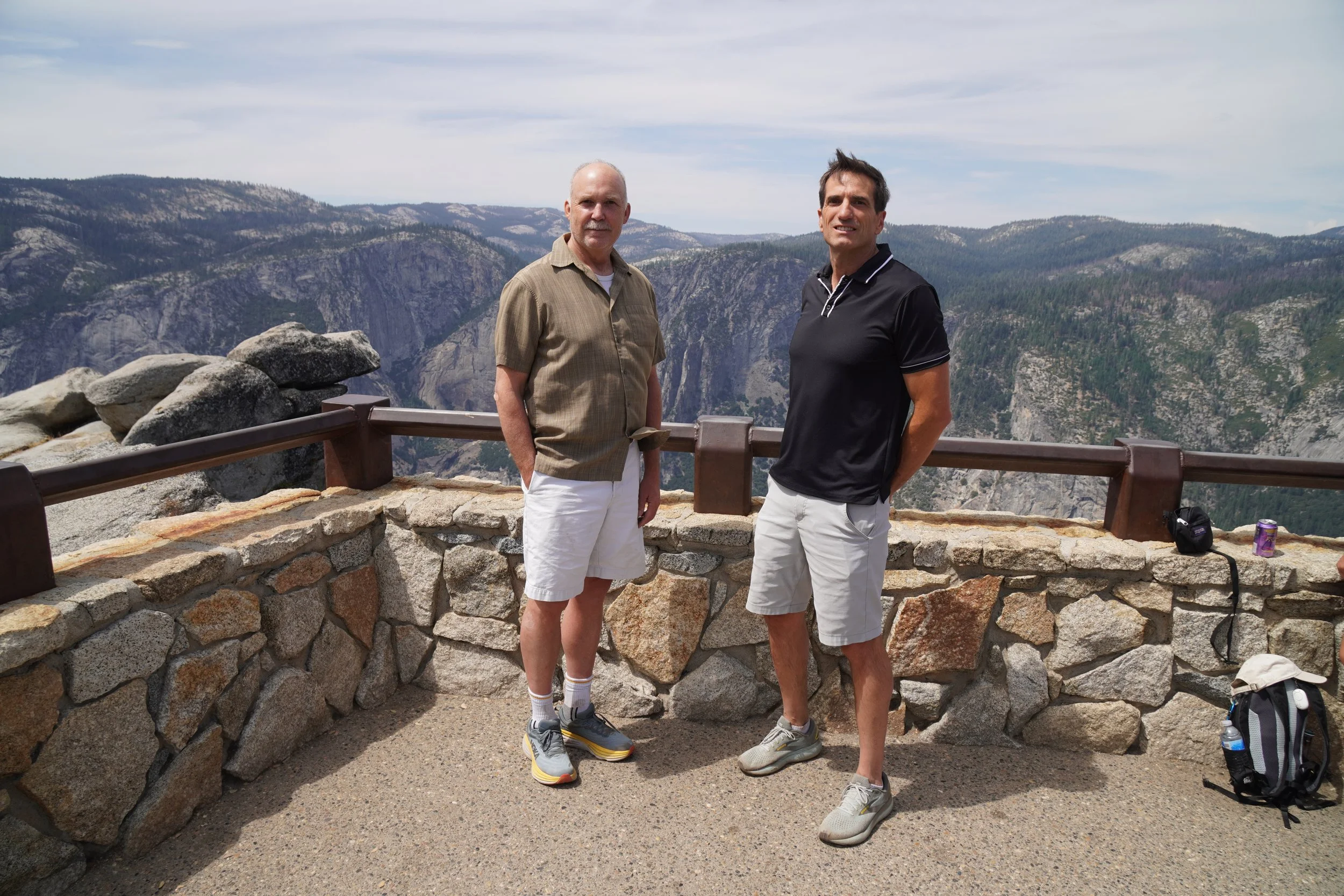
Glacier Point, where Roosevelt and Muir camped their second night together.
It is easy, more than a century later, to assume Yosemite's preservation was inevitable. It was not. In 1864, in the middle of the Civil War, Abraham Lincoln signed the Yosemite Grant, setting aside Yosemite Valley and the Mariposa Grove "for public use, resort, and recreation," the first time in American history that land had been preserved by the federal government expressly for its beauty rather than its utility. But Lincoln's act handed management of that land to the State of California, under a commission that was chronically underfunded and, by the late 1880s, under formal legislative investigation for mismanagement. The state legislature's own inquiry found real abuses in how the grant was being run, and then, in the way of these things, declined to act on its own findings. Meanwhile, commercial pressure on the surrounding wilderness was relentless.
Yosemite was not the only place on the chopping block. Across the West, landscapes we now consider permanent fixtures of the American imagination, including the Grand Canyon, were under consideration for “development.”
This was the context Muir wanted Roosevelt to see with his own eyes, and it worked. Roosevelt returned to Washington a changed advocate. Over the following years, he pushed to have Yosemite Valley and Mariposa Grove, the state-managed sections at the heart of the park, ceded back to federal protection and folded into the surrounding national park boundaries established in 1890. Congress agreed, and in 1906 Roosevelt signed the recession into law, unifying Yosemite under a single federal stewardship for the first time.
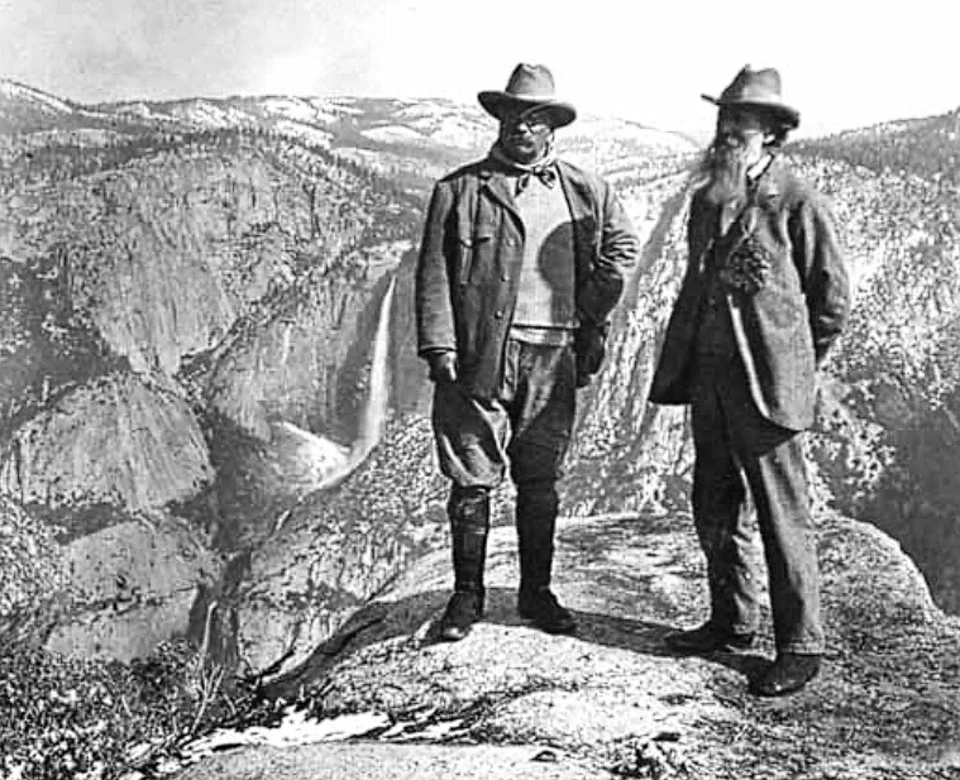
President Roosevelt and John Muir stand on the edge at Glacier Point.
Credit: Photographer: Underwood and Underwood; Yosemite NP Archives RL_12904
It was not a total victory for either man. Roosevelt never fully embraced Muir's more absolutist instincts about wilderness, and Muir spent his final years fighting, and losing, the battle to save Hetch Hetchy Valley from being dammed for San Francisco's water supply. Neither man got everything he wanted. Both men got something that we still enjoy: a national park system that has welcomed billions of visits (!) and protected millions of acres for generations neither of them would live to see. Compromise, rightly understood, is not the abandonment of conviction, but two convictions finding enough shared ground to build a legacy that can last a century.
We are, at the moment, a nation at odds with itself, and we badly need a reminder that we can disagree and still build something durable together.
Tending our natural resources is, if anything, the one place left where the partisan map genuinely scrambles. The coalition that has kept America's parks intact for a century and a half has never sorted neatly into left and right. It has always run through sportsmen and hunters, through evangelical conservationists and secular environmentalists, through ranchers who love the land they work and urban visitors who love the land they escape to. Yosemite and Muir Woods were never blue projects or red projects. They were American projects, often built by people who agreed about almost nothing else.
This year offers a particularly good occasion to remember them. The Theodore Roosevelt Presidential Library opened this summer in the North Dakota Badlands, on the nation's 250th birthday, built as a monument to exactly the conservation ethic Muir helped awaken in Roosevelt. Meanwhile, a very different but not unrelated cultural moment is underway online: the "touch grass" impulse, half joke and half genuine movement, pushing millions of screen-fatigued Americans back outside, echoed in everything from viral apps to a New York Times reader challenge built around exactly that idea. And the current administration's Make America Healthy Again push, whatever one makes of its broader agenda, has landed on outdoor time and access to public lands as a rare point of bipartisan appeal, a recognition that conservationists, sportsmen, and public-health advocates have been circling the same conclusion from very different directions for a very long time.
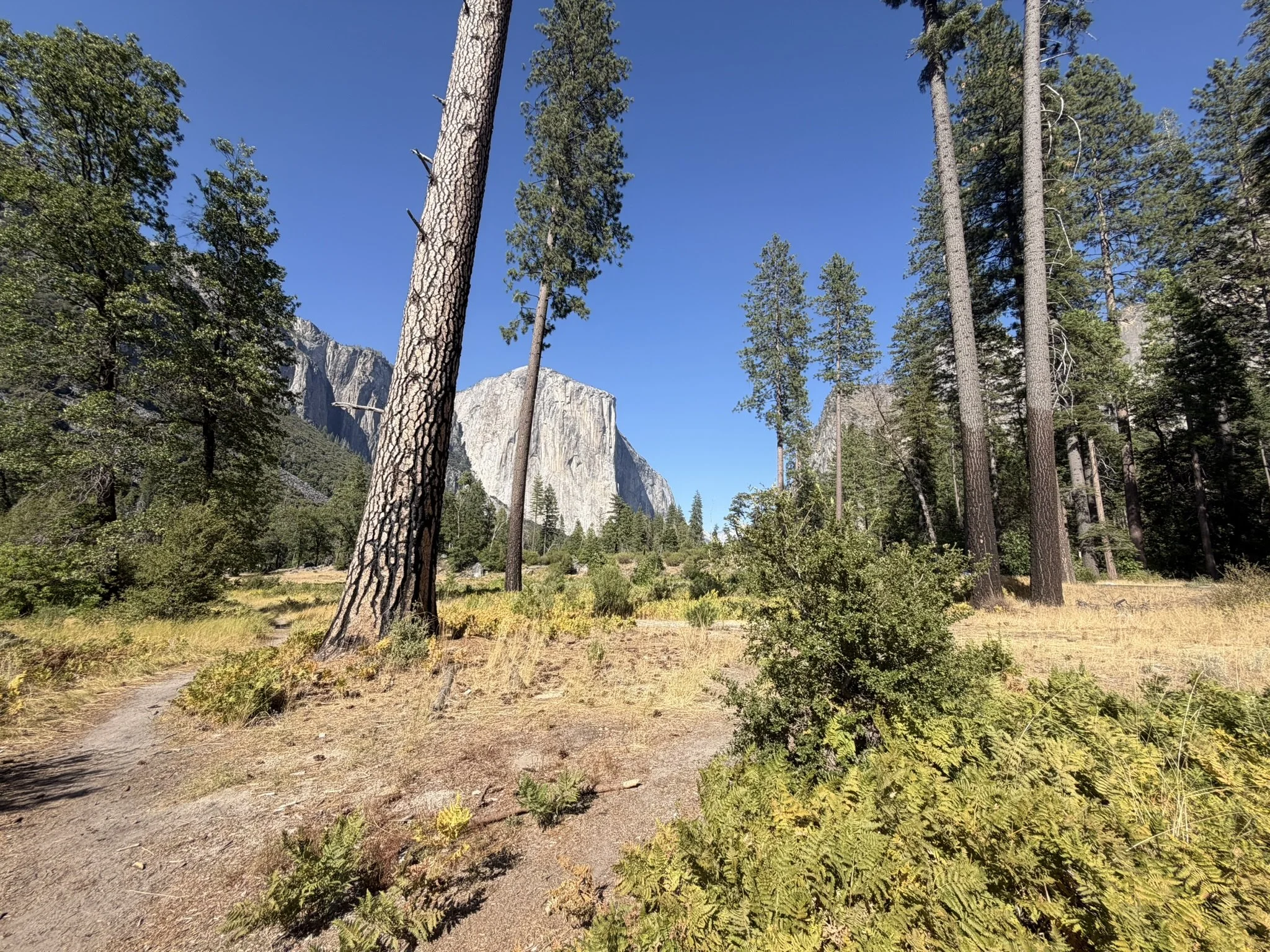
Bridalveil Fall, where Roosevelt and Muir camped their third night together.
With an estimated 323 million recreation visits just last year, and on the rise, people are voting for more common ground on sacred ground with their feet. None of this should surprise us, theologically speaking. The John Templeton Foundation has been funding research into something called "nature spirituality," the growing tendency, especially among Americans who describe themselves as spiritual but not religious, to locate their sense of the sacred in mountains, rivers, and old growth rather than in a sanctuary. Researchers connected to the Foundation trace this partly to our exhausted digital lives and partly to something older: the very same impulse that sent Moses, Elijah, and Jesus himself into the wilderness before major turning points in their callings. Scripture, it turns out, keeps using a preposition that matters. Its figures don't merely pray in the wilderness; they go into it, in relationship with the land.
Of note, Muir was raised in a strict Scottish Presbyterian household. His father found even the Church of Scotland too lax and eventually moved the family into the stricter Campbellite tradition after they emigrated. By the time Muir was eleven, he had memorized nearly the entire New Testament and most of the Old, often at the end of a switch when he got a verse wrong. As a young man, he was asked to teach a Sunday school class, and he famously taught his students botany instead of scripture, on the theory that a close look at a leaf or a flower was itself a lesson in the mind of God. Roosevelt, for his part, grew up in the Dutch Reformed tradition, a faith he kept his entire adult life even when it meant tracking down an obscure Reformed congregation in Washington rather than defaulting to his wife's Episcopal church. He too taught Sunday school, a mission class for underprivileged children in New York, which he kept up all four years of college.
Although from different denominations and very different fathers, both Roosevelt and Muir were raised on the conviction that creation itself was a text worth close reading. It should not surprise us that when these two grown men finally stood together beneath the sequoias, they recognized in each other an old, familiar awe: the sense, learned young and never quite unlearned, that they were standing in God's own handiwork.
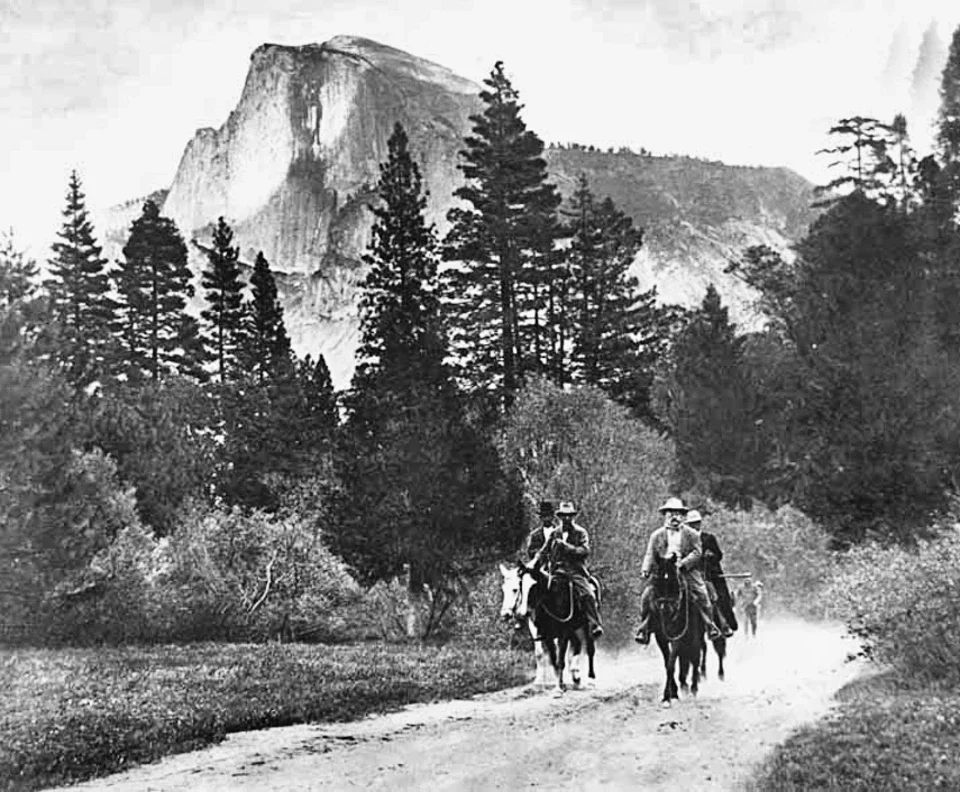
Roosevelt and Muir arrive in the Valley on horseback.
Credit: Photographer: Southern Pacific Staff; Yosemite NP Archives RL_18781
Leanne and I came home from Yosemite after our time with the Medefinds with not only a political lesson on compromise and common ground, as important as that is. Standing where Roosevelt and Muir stood, in a place both men agreed was holy even though they could not agree on much else, we begin to understand that common ground is rarely found by softening your convictions. It is found by standing, together, somewhere sacred enough to make your disagreements feel small.
Awe is not a luxury or a hobby. It is one of the oldest and most reliable paths back to a right-sized view of ourselves, of each other, and of God. Whatever theological frame you bring to Yosemite Valley, it is hard to stand in it and not have the sense of having wandered, however briefly, into a Cathedral built by someone other than us, and that our God-given job is to work together to tend it.
What a picture, and what a call to us, 'we the people,’ to tend together such a great and beautiful nation that we have been given.
"I have crossed the Range of Light, surely the brightest and best of all the Lord has built; and rejoicing in its glory I gladly, gratefully, and hopefully pray I may see it again."
— The last words from John Muir’s book My First Summer in the Sierra, and the last words our new friend Maynard Medefind prayed for us as we left Yosemite
We would love this story of finding common ground on sacred ground to encourage Americans to dream about a shared future of flourishing. Our sister film and story company, More Productions, is working on a scripted feature based on the Roosevelt-Muir three nights. Let us know if you would like to be involved!
For the full photographic record of the 1903 trip, including a remarkable then-and-now comparison tool overlaying the original 1903 photographs on their present-day locations, see the National Park Service's own retrospective, "Roosevelt, Muir, and the Grace of Place" (https://www.nps.gov/yose/learn/historyculture/roosevelt-muir-and-the-grace-of-place.htm).