Two Caesars
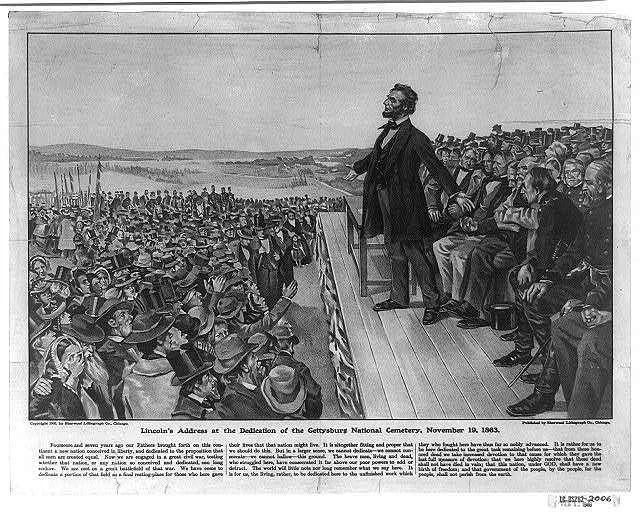
Four score and seven years ago our fathers brought forth on this continent, a new nation, conceived in Liberty, and dedicated to the proposition that all men are created equal.
— Abraham Lincoln, Gettysburg Address, November 19, 1863
On June 30, I went down to Freedom Plaza for the unveiling of statues celebrating the courage and sacrifice of Revolutionary war heroes, and came away thinking about the complicated story that two men named Caesar tell of our nation.
At the center of the new display is Caesar Rodney from Delaware, a Declaration signer who rode through the night to break his delegation's tie and cast his vote for independence. His statue was pulled down in Wilmington in 2020 to protest statues of Americans who had enslaved people. Lined up before his resurrected statue are twelve Revolutionary soldiers, half of whom were Black. One of those is Caesar Glover, who was stolen from Africa as an eight-year-old boy, sold in Massachusetts, and who went on to pull an oar in the most famous boat crossing in American history.
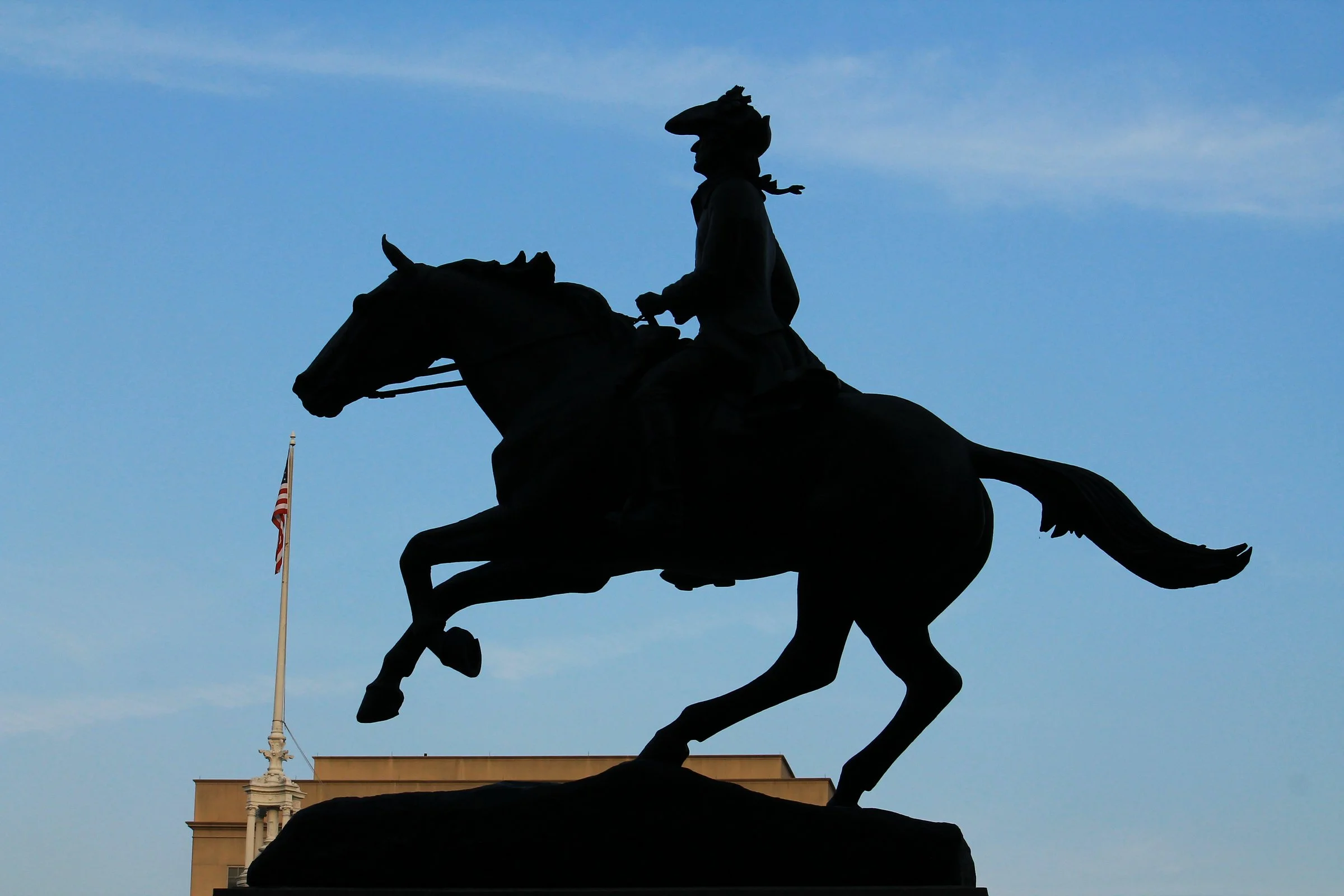
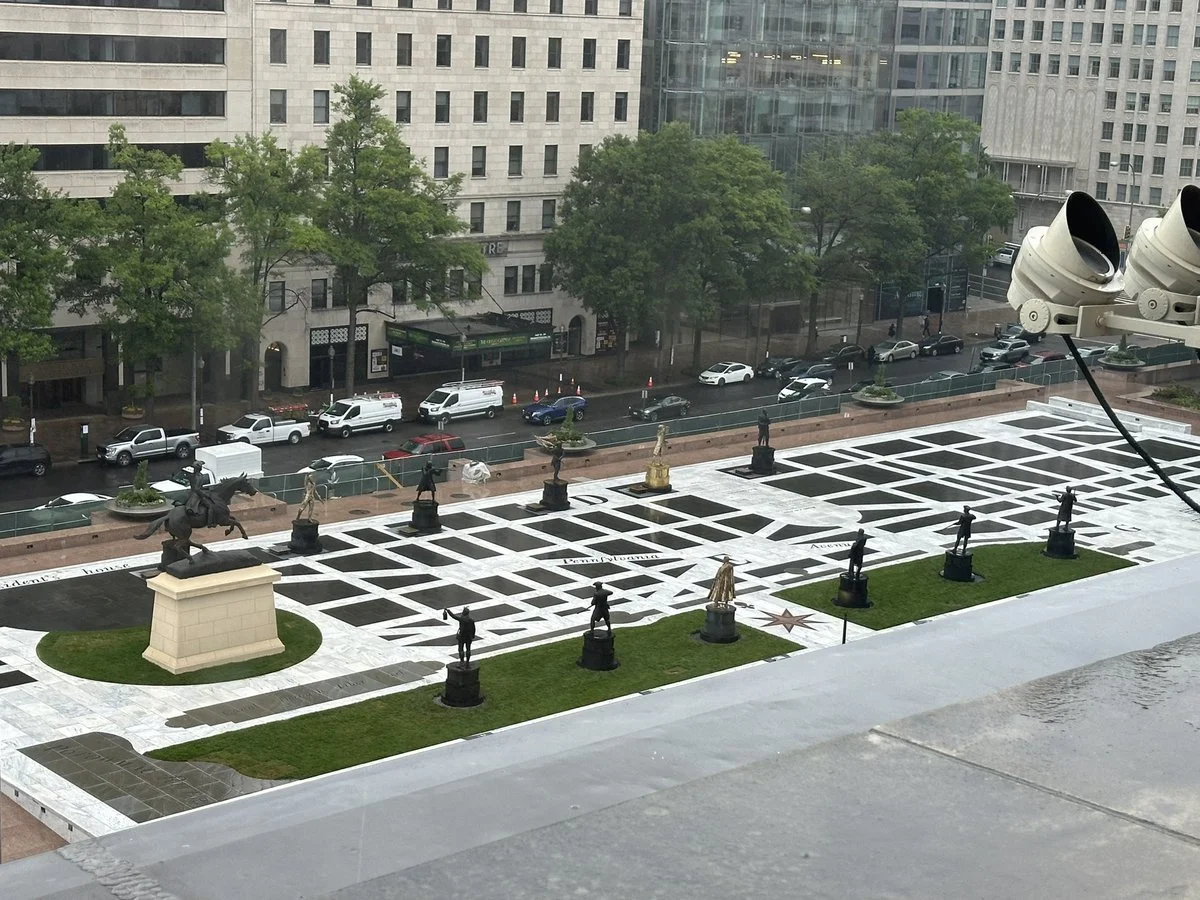
Left: Caesar Rodney Statue, Right: 12 Revolutionary Soldiers at Freedom Plaza
I have been rowing with Caesar Glover for a while now, and the complexity of his role in the Continental Army as an enslaved man, along with the challenges we face as a nation discussing it, has finally and fully settled in.
Years ago I read David McCullough's 1776, and the passage that stuck out to me the most was the account of John Glover's Marblehead mariners of a Massachusetts port city who formed one of Washington’s most critical units. Among other heroic actions, they famously ferried Washington's trapped army off Brooklyn Heights in a single night. In December we will celebrate the 250th anniversary of their rowing the Continental Army across the ice-choked Delaware River on Christmas to attack Hessian troops at Trenton, thus saving the Revolutionary cause.
I remember wondering why no one knows this story. As one of the only racially integrated regiments in the Continental army, the presence of Black soldiers caused a snowball fisticuffs between a thousand soldiers that Washington himself had to break up. Black, white, and Native men from Marblehead were at the same oars that helped row the Continentals, and our nation, toward eventual freedom.
But the reason I could not let their story go had less to do with history than with the present. We were to celebrate a 250th anniversary that could just as easily become a 250th argument. The temptation, on both the right and the left, is to hold and promote a version of the founding that confirms the bias their side is already holding – a perfect past or a fatal flaw. What I wanted, and what The Clapham Group works to create, is a shared story true enough that a “red” family and a “blue” family could sit in front of it together and each find something to honor and something to reckon with.
We believe that a society is held together less by its laws than by its shared stories that tell a people who they are, what they owe one another, and what they are building together. Take away the shared story, and you are left with a cacophony of voices. Jonathan Haidt made this argument in his Atlantic essay, "Why the Past 10 Years of American Life Have Been Uniquely Stupid," which he framed around the Tower of Babel. In noting that we used to have a single “mass audience” that shaped a shared narrative as if we were all looking into the same gigantic mirror at the reflection of our own society, he quoted a former CIA analyst:
The digital revolution has shattered that mirror, and now the public inhabits those broken pieces of glass. So the public isn’t one thing; it’s highly fragmented, and it’s basically mutually hostile. It’s mostly people yelling at each other and living in bubbles of one sort or another.
Our social-networking tools with "likes," "shares," and "retweets" have turned public life into a performance rewarded for outrage and triviality. We have been living amid the ruins of Babel ever since, with each fragment fluent only in its own dialect, feeding on the trivial and the inflammatory, unable to speak to or hear from another.
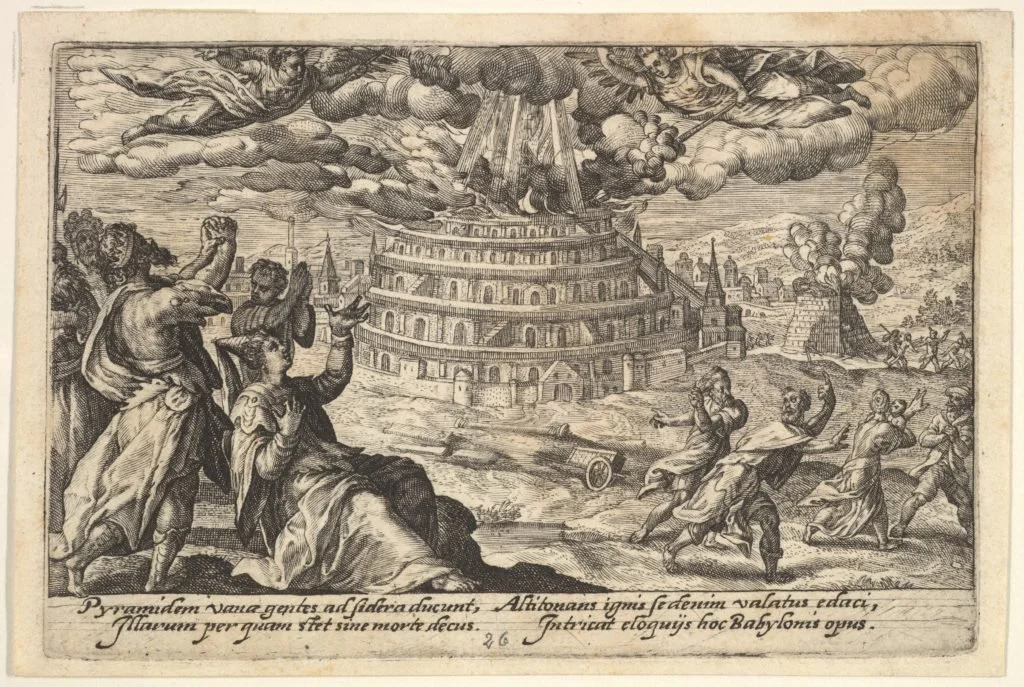
Destruction of the Tower of Babel
The 250th anniversary is a chance, however brief, to speak a common tongue again and to re-gather around one story instead of scattering across a thousand feeds. That is why the Marblehead regiment was, and still can be, that story.
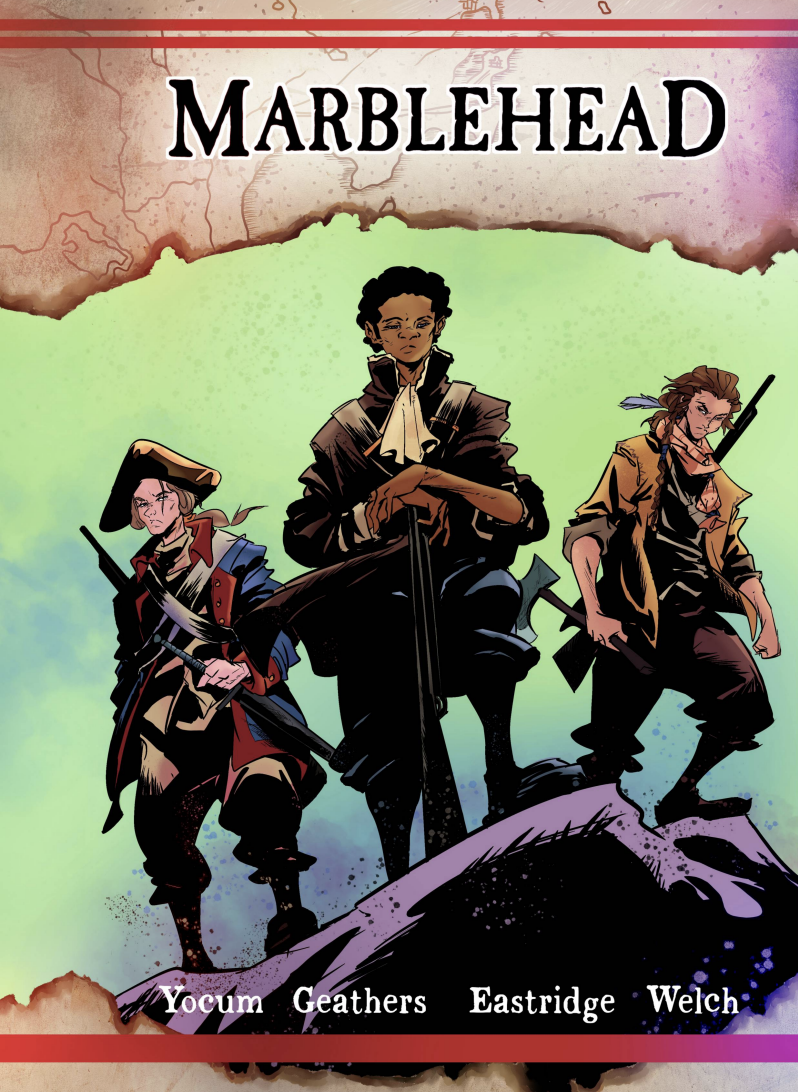
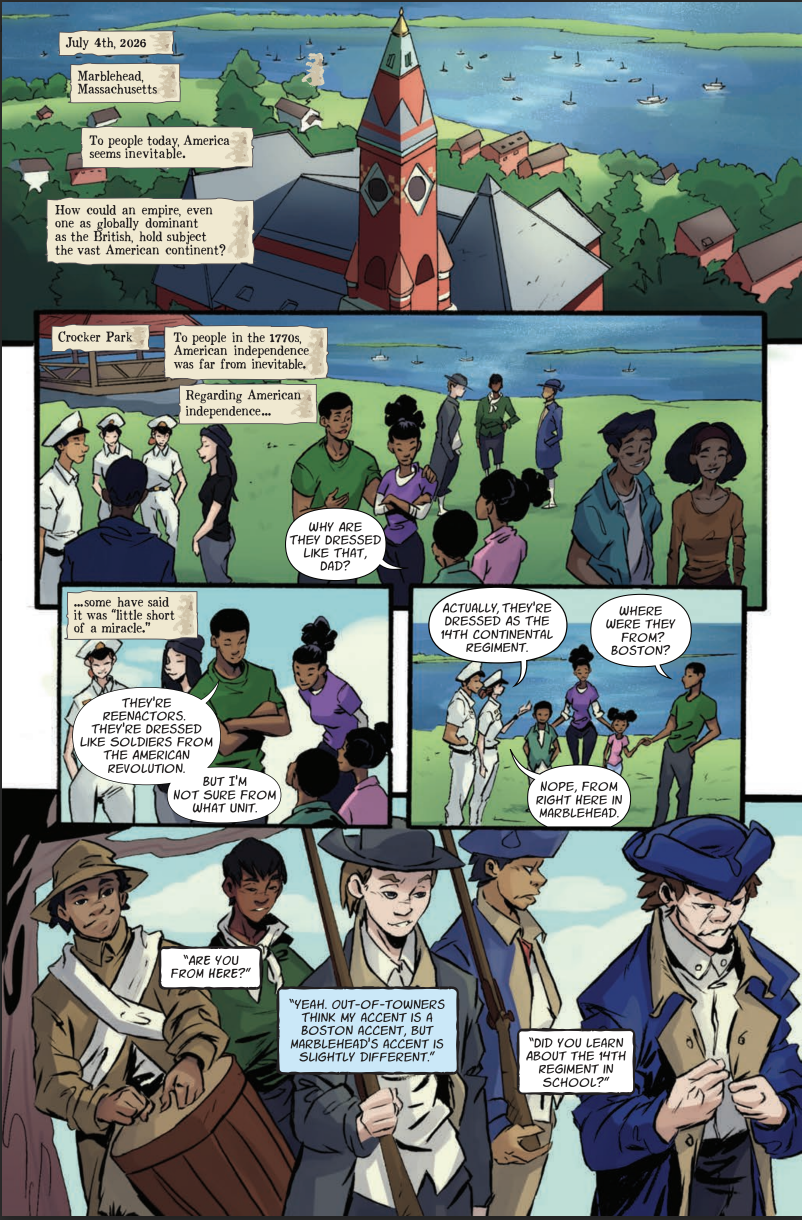
Through our sister production company, MORE Productions, the effort began as a scripted series developed by Erik Bork, the Emmy and Golden Globe-winning writer-producer of HBO's Band of Brothers and From the Earth to the Moon, who got his start working for Tom Hanks. After getting a final pass from Lionsgate, the project became what it is now: an original graphic novel. It is timed to release this year around the 250th anniversary of the crossing itself, which was Christmas night, 1776. The theme is E Pluribus Unum, qualified by the fact that some of the men rowing toward the country's freedom were not yet free themselves.
If you want to see the whole picture of what we're after, look at Emanuel Leutze's Washington Crossing the Delaware. Rabbi Meir Soloveichik made the case beautifully in a Wall Street Journal essay on the painting: the "errors" critics love to catalog (such as the flag that didn't yet exist, the too-small boat, and the dawn light on a midnight crossing) are not mistakes but deliberate artistic choices. Leutze was an abolitionist and filled the boat with a deliberately diverse crew modeled on the integrated ranks of the 14th Continental Regiment, Glover's own Marbleheaders: a Black oarsman, a man in a Scottish bonnet, a Native man near the stern. The boat, Rabbi Soloveichik argues, is not the portrait of a single Great Man; rather it is a portrait of America as a fragile, improbable coalition bound together by a shared crossing to freedom.
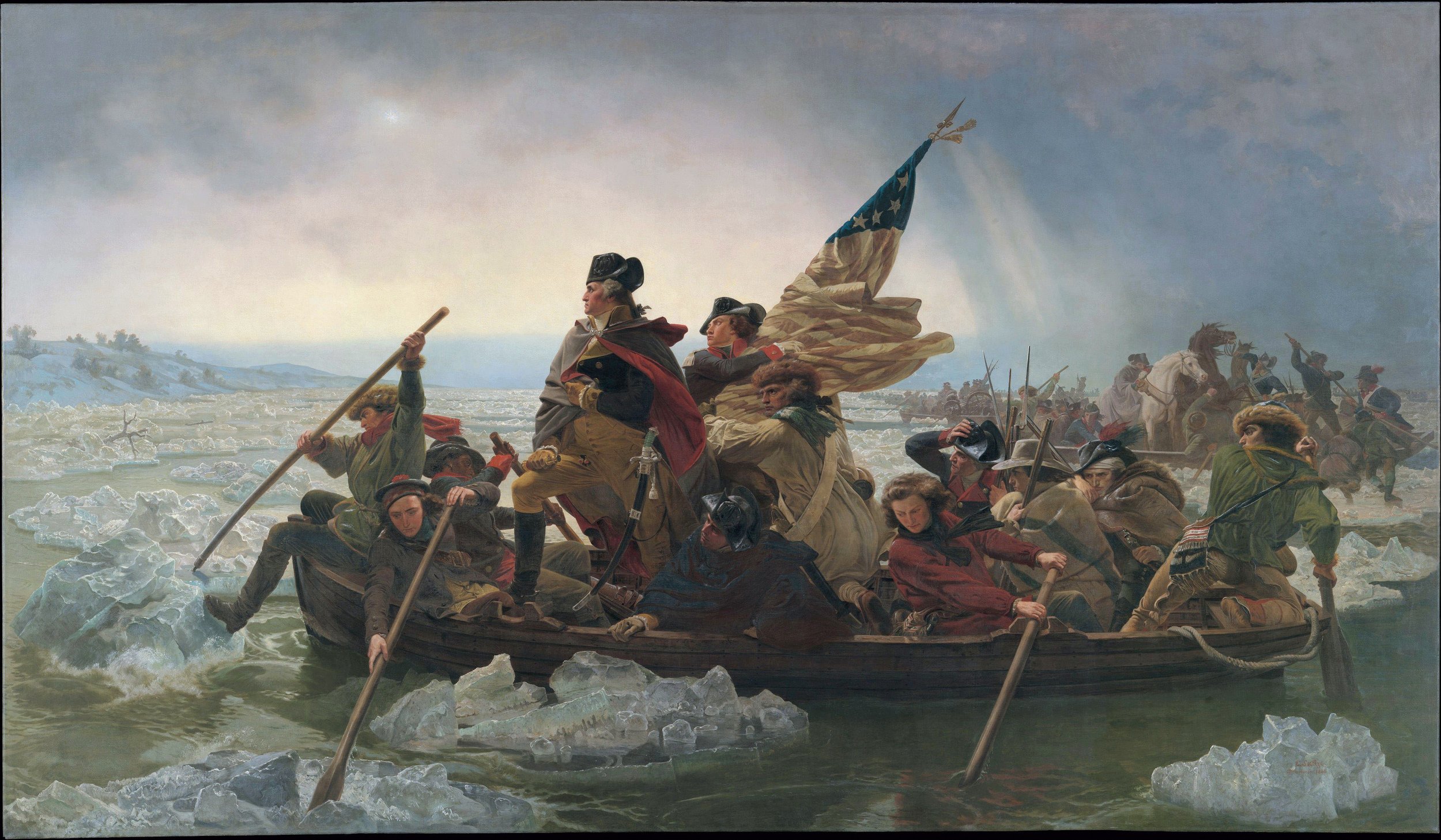
Emanuel Leutze's Crossing of the Delaware
The closer you look at the American founding and the men in Freedom Plaza, the more it refuses to resolve into simplistic heroes and villains, and the honest response is not to look away.
I've been listening to Tom Holland on The Rest Is History work through our founding. The episode on Thomas Jefferson, who wrote that all men are created equal, yet enslaved some six hundred people across his lifetime, landed hard. The hypocrisy of our founding is real, and yet the words Jefferson wrote became the very charter that would one day be turned against the world he lived in. The indictment and the ideal came out of the same pen and the sacrifices on display in Freedom Plaza.
A few days ago my wife and I saw The Great Awakening, the film about George Whitefield. I walked in with a perfect picture in mind of the great evangelist and walked out with a more complicated one. Whitefield preached to the enslaved, published open letters rebuking masters for their cruelty, and insisted that a Black soul stood equal before God. But he also lobbied the trustees of Georgia to legalize slavery, arguing the colony and his beloved orphanage could not prosper without it, and he worked enslaved people on a South Carolina plantation to fund the orphans of his Bethesda house. To its credit, the film makes this a focal point of disagreement between Whitefield and Benjamin Franklin, who were otherwise close friends.
And then there is General John Glover, whose home we hope to visit this September as part of a New England trip for our 40th wedding anniversary. His Marblehead unit came out of a New England that was fast becoming the hotbed of American abolition. Massachusetts would be the first state to end slavery outright, not by statute but by its courts, between 1781 and 1783. And yet, slaveholding ran straight through the leading families of that same coast, and John Glover resisted General Washington’s appeal to allow one of his enslaved men to continue fighting in the war.
I've had the privilege of working with Maurice Barboza during production of the graphic novel. Maurice has spent the better part of his life living in this tension. Sparked by his aunt's fight in the 1980s to be recognized by the Daughters of the American Revolution, Maurice has been trying to build a National Liberty Memorial in Washington that would be a monument to the five thousand and more Black patriots, enslaved and free, who fought for a country that would not count them as citizens for another century. Congress has authorized a site for it, at the northeast corner of 14th Street and Independence Avenue. Forty years later, it is not yet built, but the White House has indicated support for it.
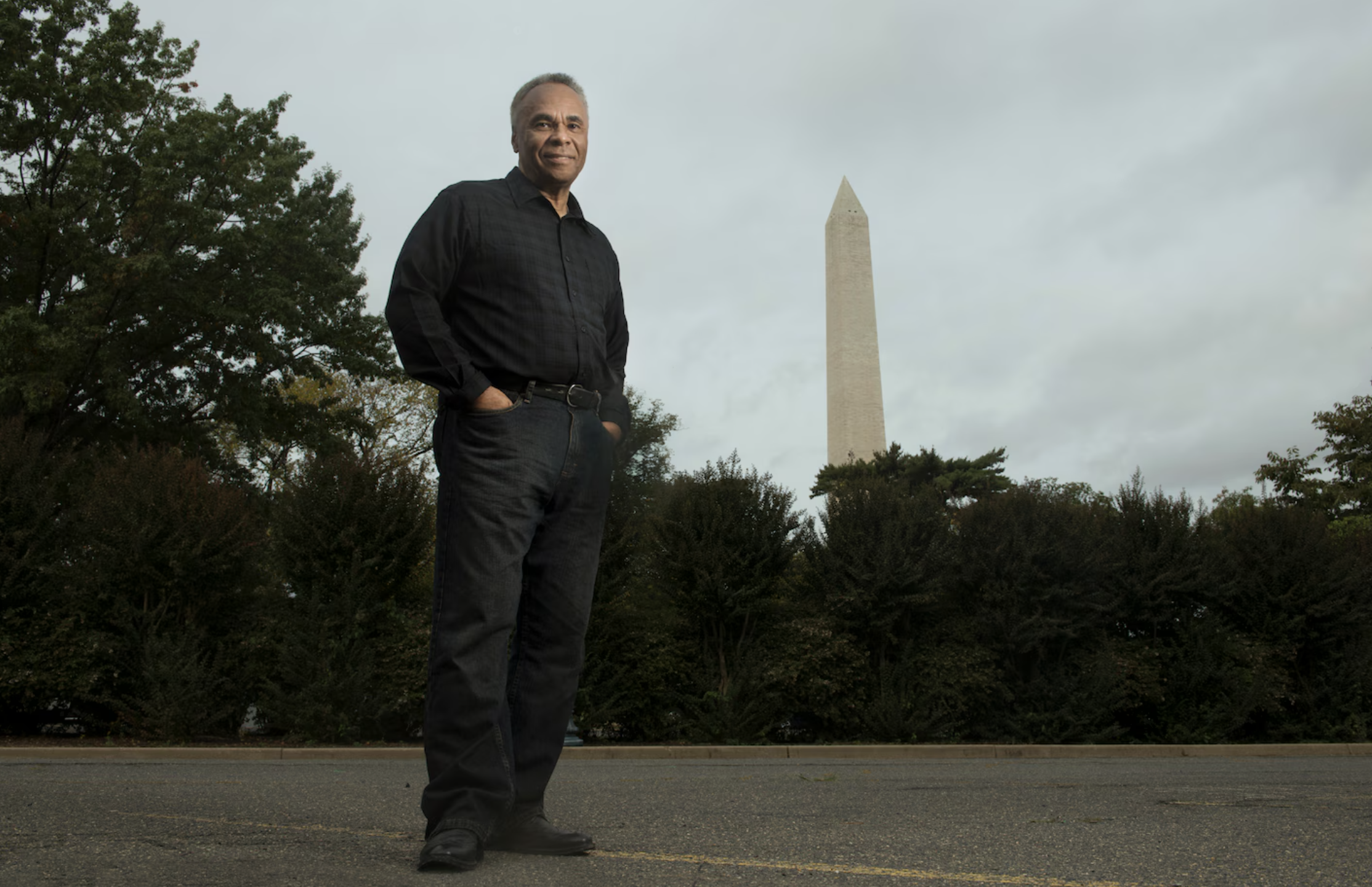
Maurice Barboza on the site of a future memorial to commemorate the thousands of enslaved and free black persons who fought in the Revolutionary War.
Maurice's research suggests that nearly a third of the known Black soldiers of the Revolution came from Massachusetts. In a sense, the men of Marblehead – enslavers, enslaved and freed – were not incidental to the founding. They were, in a very literal sense, the hands that rowed us to freedom.
Standing in the Plaza and thinking about Maurice’s own herculean effort to raise a monument to recognize the contribution of Black Continental Army soldiers is when the challenge fully settled in. Looking around the crowd I saw almost no Black faces. I don't know whether or not the Administration invited Black leaders to attend, but if they had been invited, I would understand why they would be hesitant to be there. From many Black leaders’ and organizations’ perspectives, this Administration has not shown sensitivity to their concerns. And in a polarized country, it has become genuinely costly to be seen in the wrong public square.
This is true on the right and the left. Tribal logic is merciless. If you appear alongside the other side (“the enemy”) on an issue you may otherwise agree on, some voices within your own camp will brand you a traitor. They won't merely disagree, they'll question your loyalty, your authenticity, your standing to belong. In the political version, they will primary you for insufficient purity. And so people who might have stood shoulder to shoulder on a given issue decide, rationally, to stay out of public view.
Years ago, I argued that if we mean to reverse this polarizing and radicalizing trend, we have to protect our in-group moderates. I don't mean people who have watered down their convictions. I mean people who hold their tribe's positions as firmly as anyone but have refused to adopt its contempt of others. What they have moderated is their tone and temperament, not their beliefs. They are the ones still able to speak across the line, and they are precisely the ones our politics now punishes most. Both parties increasingly reward the bombastic, the caustic, and the cruel. As a recent Wall Street Journal piece on Graham Platner and Ken Paxton observed, for a certain kind of voter, the ugliness is the point. The peacemaker gets primaried. The bomb-thrower gets promoted.
It is for this reason that we built a circle of consultants and supporters, drawn into our work from across the whole length of the American spectrum, including Robert George and Cornel West, the Princeton friends who have modeled honest disagreement better than almost anyone alive. That breadth is not an accident, it is the argument. A story that I can partner with former Clinton Press Secretary Mike McCurry on is a story the rest of us can trust to be told fairly.
I say this because I know many schools and librarians have grown cautious highlighting stories that foreground diversity. It is our hope that a graphic novel, supported in part by the National Endowment for the Arts and even the Heritage Foundation, offers exactly the permission a hesitant library needs. Marblehead belongs on the shelf for young-adult readers not in spite of its complexity but because of it. If the left and the right can both put their names to this boat, a school can surely let its students climb aboard.
Taking the national temperature on the eve of the anniversary, Pew found us in a decidedly sour mood: most Americans dissatisfied with the country's direction, a clear majority convinced our best days are behind us, and two-thirds expecting we'll be more divided a generation from now. We are throwing ourselves a 250th birthday party in a foul temper. When we insist on seeing our own country almost entirely through the lens of its loudest and most extreme voices, we lose the public squares in which to simply stand beside one another, and of course we sour on our future.
However, for all the sourness, Pew found that most Americans remain more hopeful than not about what lies ahead. That, I think, is what William Galston meant in writing that even as America's mood sours, its creed endures. The mood is weather; the creed is climate. Moods come and go, but our creed – that we are all created equal and all belong – will endure.
That is the wager of Marblehead, and of every story like it. Not that a graphic novel can mend a fractured country, but a country remembers who it is by the stories it consents to tell together. Caesar Glover and Caesar Rodney share a common ground now – the enslaved and the enslaver. Our task is to keep telling that story truly enough, and commonly enough, so that our children will still want to write the next chapter. The statues in Freedom Plaza may be temporary, but Maurice’s vision for the National Liberty Memorial is enduring.
So what do we do with a plaza that honors a slaveholder torn down five years ago and an enslaved man who rowed Washington to Trenton a few feet away? I think we embrace it. Not because the contradictions cancel out, but because this is our story, and freedom has never once arrived clean. Freedom came to us through people who saw part of the truth and were blind to the rest, who wrote better than they lived, who built the foundations of liberty with unfree hands and then handed us the tools to finish what they could not. The work of every generation since has been to take the ideal more seriously than the men who first wrote it down.
That is the story we are telling in Marblehead. Not a triumph nor a deconstruction. It is messy, complicated, worth pursuing, and important to keep telling ourselves. The two Caesars now stand within a few feet of each other on Freedom Plaza. I don't think that irony is a scandal to be managed. I think it is the truest thing on the Plaza.
It is rather for us to be here dedicated to the great task remaining before us -- that from these honored dead we take increased devotion to that cause for which they gave the last full measure of devotion -- that we here highly resolve that these dead shall not have died in vain -- that this nation, under God, shall have a new birth of freedom -- and that government of the people, by the people, for the people, shall not perish from the earth.
— Abraham Lincoln, Gettysburg Address, November 19, 1863