
Lessons and Carols to Rebuild Social Capital
Congratulations on making it through Thanksgiving and the office holiday parties. As school and church programs conclude, one major event remains: celebrating Christmas, Hanukkah or Kwanzaa with family and relations.
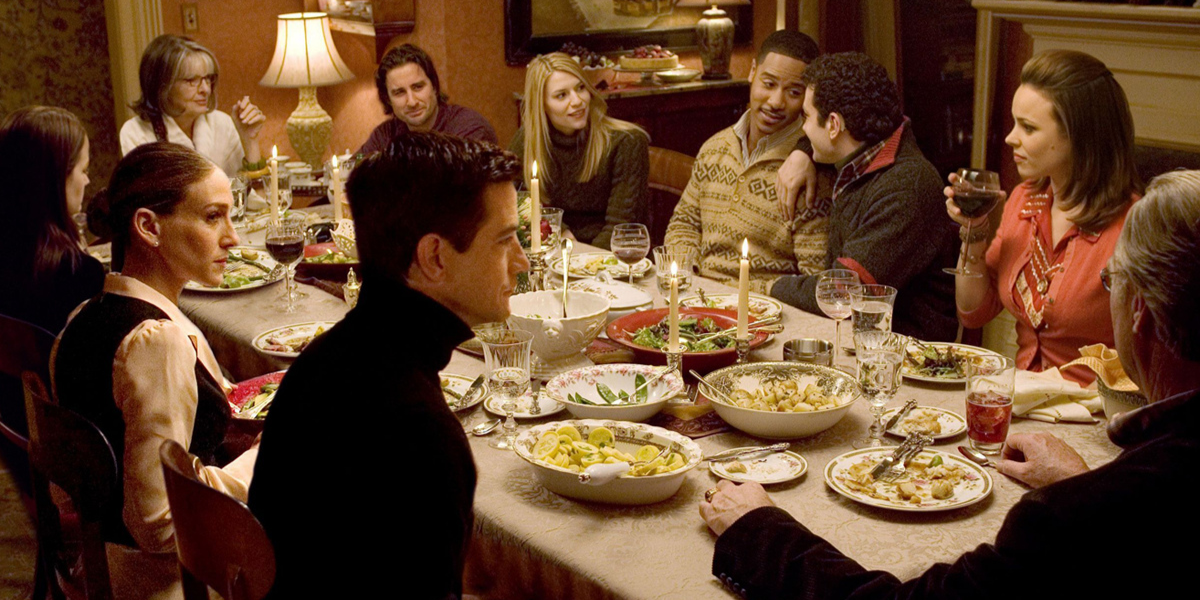
Scene from “The Family Stone”
Yes, the holidays are a time for socializing and celebrating the best of our blessings. Yet, in our increasingly polarized milieu, navigating these gatherings can leave us bracing for uncomfortable or even hostile exchanges masked in passive-aggressive 'pleasantries.' Family get-togethers once fostered social capital. Now, they can unravel our social fabric. Ideological filters dominate, and even well-meant (neutral) intentions may be misread by others applying their own lens. A simple question about a preference can lead to an unexpectedly tense debate, highlighting how fragile our conversational footing has become.
Why were the eggs in the casserole not free range?
Did you mean to leave Rachel Maddow's book on the coffee table for me to see?
Why did you use the term “African-American” rather than Black?
We know this can be difficult. Not only have parent-child relationships become strained due to extreme ideological polarization, but so have some marriages. We explored this tension, with humor, in our sister production company More Production’s recently released romantic comedy, Elephant in the Room.
On their first date, Leah hesitates and asks, “Should I… not assume that you have the same view as me? I mean, I obviously know that people think differently than me.” Vincent replies, “Anyone you know?” Leah answers simply, “No.”

Scene from “Elephant in the Room”
It may seem like the holidays bring unique challenges: multiple gatherings in a short period, heightened family dynamics, and pressure to make this “the most wonderful time of year.” But in reality, we face the tension of hyper-polarization every day—at work, in places of worship, at school, in our own homes, and especially online.
Over the last 18 years, the drivers of polarization have increased, while efforts to build social cohesion and capital have decreased. Some reasons include:
Morality: Political discourse has shifted from policy to morality. Compromise is now often viewed as wrong or corrupt. As we wrote last year, an in-group moderate reaching out to an “enemy” is viewed as traitorous in tribal politics. In purist politics, working for the common good can appear weak or even a betrayal.
Media Fragmentation: The rise of new media channels and platforms amplifies diverse voices but also divides and isolates audiences. Rather than gaining a broad perspective, viewers often turn to niche channels that reinforce their existing views.
Identity: Virtual communities, rather than real-life interactions, shape self-worth and foster rigid identity groups. This process extends into the physical world through identity-based lifestyle sorting: choosing neighborhoods, schools, faith-communities, and romantic partners based on political allegiance.
Money: Social media algorithms found that the most profitable content is rage. Oxford University Press named 'rage bait' its word of the year, reflecting the internet culture of 2025. Sophisticated trackers record users' cognitive triggers to create individual feeds of continuous dopamine-inducing content. The more users engage with this content, the more content creators get paid.
While individuals may wish to pursue common causes, uncover common ground, and advance the common good, language and identity differences can create barriers and make engagement more challenging. Tribalization literally creates “local dialects,” which are reinforced by fragmented, niche social media. These dialects can become undecipherable outside their microcosms of communication.
Consider how similar ideas are framed across the political spectrum:
Language on the Right vs. Language on the Left:
Family vs. Two-Gen
Pro-Life vs. Anti-Abortion
Pro-Abortion vs. Pro-Choice
Woke vs. Social Justice
Opportunity vs. Equity
Middle Class Tax Cuts vs. Tax Breaks for the Wealthy
So how do we change the incentive-and-reward structure so that the willingness to be a bridge for the common good is actually celebrated as heroic? How do we counter the drivers of caustic polarization and inspire the moral imagination for shared flourishing? How do we rebuild the plausibility structure that allows this to be pursued? How do we bridge our language gaps? How do we stop bracing and start engaging?
It starts at home. And what better time to engage in this meaningful work than the holiday season? To help you rebuild social capital in the closing days of 2025, Clapham invites you to reflect on several 'lessons' we have learned and encourages you to add these “carols” to your playlist as reminders throughout the season.
Be Curious: This song Curious from the animated series The Chosen Adventures reminds us that we were made to be curious. A spirit of curiosity is a first step to fostering shared understanding.
2. Be caring: While showing people of different beliefs and traditions across the world, the music video of Tim McGraw’s Humble and Kind reminds us of our common cause to stay humble and kind.
3. Build Camaraderie: As much as we were made for curiosity, we were made for community. May we lean on one another, and engage in shared activities and experiences to strengthen connections.
4. Finally, be courageous. Truth matters, but truth in love matters most. When and how you address ideological differences is key. Sometimes, keeping your opinion to yourself may be the most loving thing you can do. In our experience, the real challenge may not be speaking truth to someone from another tribe, but being willing to speak truth to someone from your own tribe when you see them commit a verbal foul.
In 2026, Clapham is launching a new 'polarization review' service to help clients navigate these language barriers between groups. By highlighting potentially alienating language and offering bridge-building alternatives, this service aims to build awareness and foster more effective communication, supporting the common good. If you want to communicate more effectively and support bridge-building within your audience, sign up to be among the first to learn more about this service.
It takes courage and perseverance to fight for social capital; during this holiday season, may we find ourselves guided by love, curiosity, and compassion above all else.