
How Five Leaders Are Rebuilding Trust Across Divides
As an organization committed to devising results-driven strategies to pursue common cause, uncover common ground, and advance the common good, the Clapham Group recognizes that polarization is a key factor in the breakdown of trust we’re experiencing. This social unraveling is an impediment to addressing the challenges of our moment. This is the third installment of a series on truth and polarization. You can read the first two pieces here and here.
In today’s piece, we thought you might like to read how different groups in different sectors are addressing systemic polarization. We reached out to some friends of Clapham and asked each to describe how they work to build relationships and trust in different ways.
Connecting People Through Storytelling
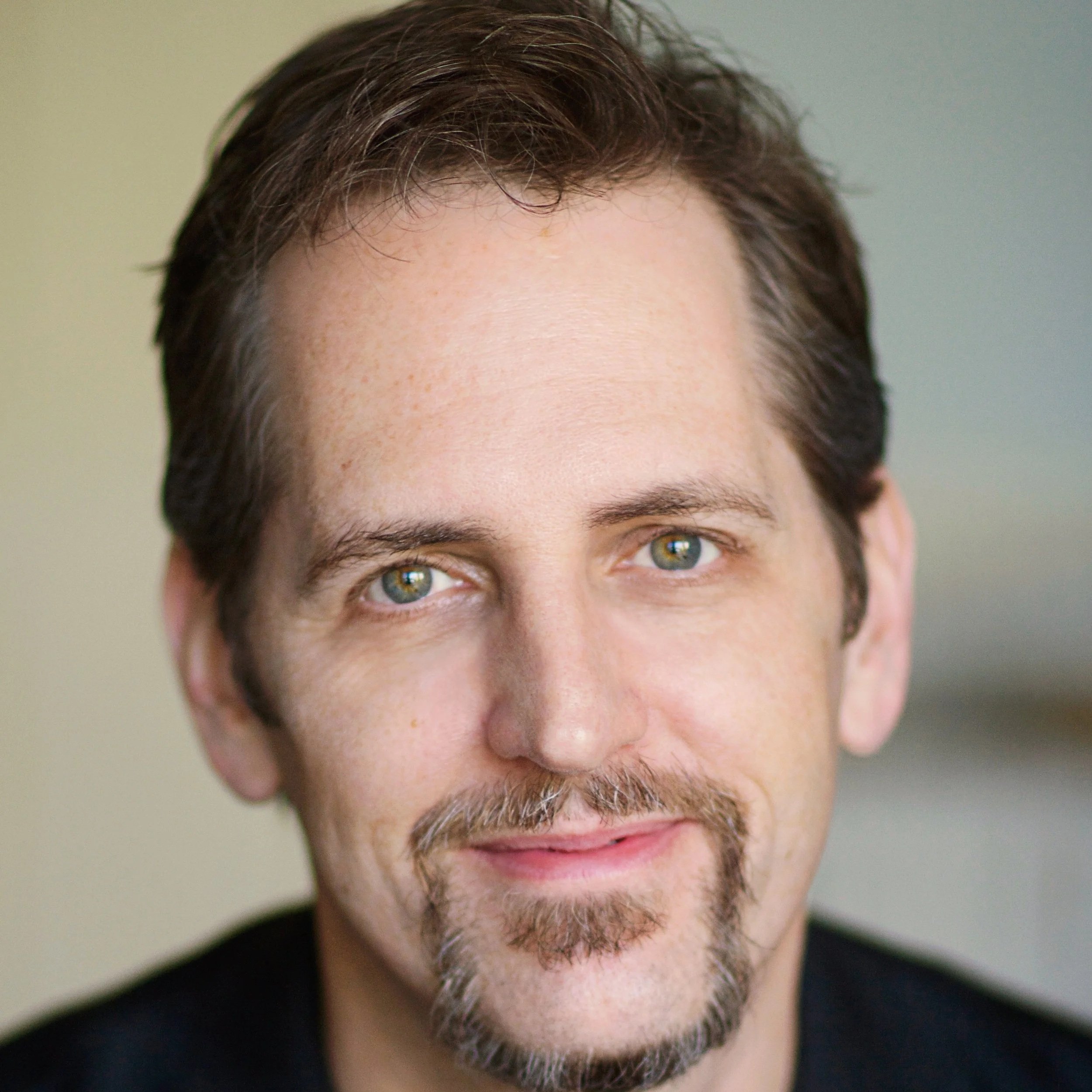
Erik Bork, Emmy-award winning filmmaker, writer, and producer
People on opposite sides of the political spectrum just seem to avoid each other these days. At least in person, where there is no anonymous social media handle or sense of tribal power to hide behind. And if politics come up at all in film and television, it’s usually not the two sides discussing things in a respectful way. It’s either an own-fest on a news panel or a clear political slant to the story without acknowledging that there could be any other side to the argument.
I decided to make a film where two people have to talk about their views in the age of Trump — because a romantic attraction inspires them to want to see how deep the others’ supposedly horrific opinions run. Actually only one of them is horrified, the other is pretty open. But it’s December 2020, the election is over and January 6 is about to happen, and one character is horrified by the President who says it was rigged, while the other voted for him. Twice.
In screening the film in public settings, I’ve noticed that what I was hoping would happen does, at least for a sizable number in the audience. Rather than hardening them in their opinions, enraging them, depressing them, or exhausting them, it seems to make them want to talk. About polarization as the issue behind all the other issues. And what it does to relationships. Including their own. No matter how clearly on one side they are. Because the light-hearted comedic approach the film takes, with two likable decent people who just see the issues differently, tends to soften the walls people come to the story with and reminds them that their fellow citizens are not like the politicians, media or online screamers incentivized to simplify every issue and monetize hate and fear. Rather, they’re people that might be worth getting to know and finding common ground with.
Uncovering the Ways Americans Have More in Common Than They Think
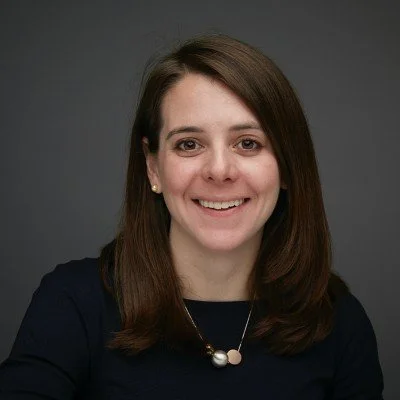
Kate Carney, Deputy Director, More in Common USA
The forces driving our toxic polarization are multifaceted—yet so are the various solutions needed to build resiliency against it. At More in Common, we’ve been studying these forces—and ways to overcome them, for the last eight years, and learned a few things along the way. Here’s a few examples.
Our research has uncovered how we have misperceptions of our political counterparts—often thinking of one another as holding more extreme views than we actually do. We call these “perception gaps” and have found them in areas like how we think we should teach history to how we prioritize issues when we cast our votes to the role of religious identity in Americans’ lives. Identifying and correcting those perception gaps not only allows us to help one another feel seen by recognizing where we have false assumptions of one another, but can reveal common ground that can serve as a foundation to build off of for those areas where we do hold real disagreements.
We’ve found that well-designed communication strategies can challenge assumptions and foster greater openness across political divides. In one study, listening to conversations between people with different political views increased listeners’ willingness to engage with their political counterparts. In another, watching videos showing people from their own political party reconsidering their own misperceptions about the other side temporarily reduced feelings of hostility to levels that resembled the climate of the 1980s—where feelings were near neutral across party lines.
When researching who is interested in connecting across differences, we found that one of the most effective ways to build relationships across differences is actually the one Americans are most interested in doing—which is working together on a mutual goal in their community. This points to an opportunity to build these relationships not just through activities to explicitly bridge divides, but by leveraging the spaces and experiences Americans already participate in—like service, sports, and everyday community gathering places, as a place to foster these connections.
These insights represent just a few strategies to counteract toxic polarization. At More in Common, our contribution to this work is to deepen our understanding of one another, especially at a time when our public debate is increasingly dominated by partisan narratives and the loudest voices at the extremes. More in Common’s goal is to help Americans tell a different story about themselves; and in a moment of rapid social, political, economic, and technological change, to help leaders refine approaches that are uniquely effective in an age of division and tribalism by equipping them with a more accurate, human-centered picture of how Americans think, feel, and see one another.
Community-Led Bridge Building and Violence Prevention
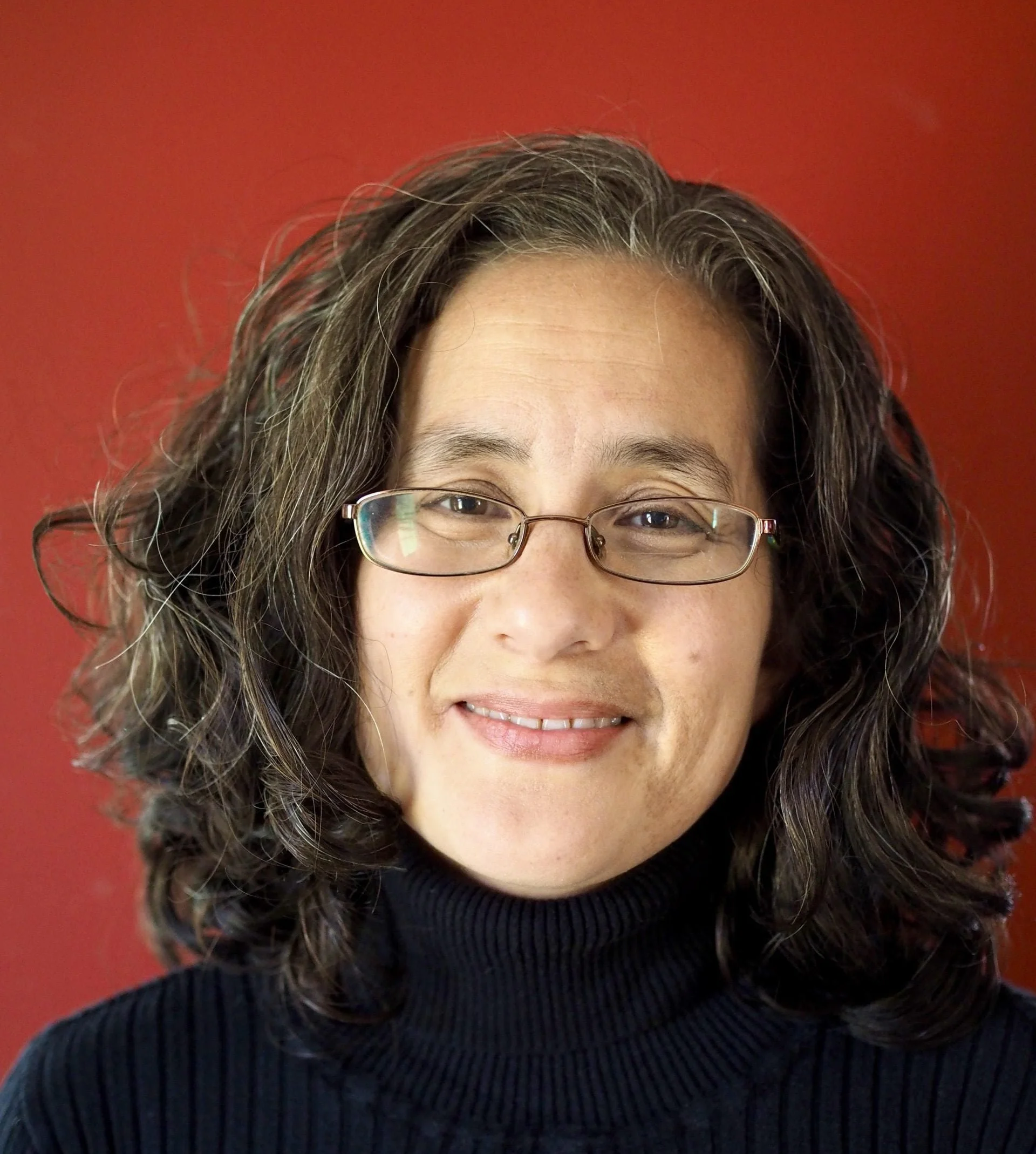
Julia Nelson, Chief Operating Officer, The Woodson Center
The Woodson Center’s Voices of Black Mothers United (VBMU) initiative is a nationwide network of mothers who have lost children to homicide and have turned their pain into purpose by working to make their neighborhoods safer for everyone. One of the most important ways they accomplish this is by helping to rebuild trust between local law enforcement and community members. This work takes on many forms, including, but not limited to:
A VBMU mother may accompany local police officers when they are notifying family members that a homicide has occurred. The mother will be able to comfort the family, helping to ease communication between the officers and the victim’s loved ones. This often helps secure the family’s cooperation with police, which can significantly raise homicide clearance rates.
VBMU mothers may take neighborhood youth and law enforcement officers through role playing exercises where they act out a scenario in the other person’s shoes (cop playing the youth and the youth playing the cop). This often helps young people empathize with the threats and dangers law enforcement officers face on the jobs.
VBMU mothers may walk law enforcement through different techniques for processing homicide scenes with understanding and empathy for the victim’s family members (e.g. don’t leave a body lying out at the crime scene for longer than absolutely necessary).
VBMU mothers regularly publicly recognize particular officers in their community for excellent community policing.
VBMU mothers often facilitate activities where community members and law enforcement can socialize and get to know one another in semi-structured ways: playing basketball together on mixed teams, police officers fixing people’s bicycles, mounted officers letting young children ride their horses, etc. The specific activities vary widely from community to community.
Several factors contribute to the success of this work: the VBMU mothers’ unimpeachable moral authority, their knowledge of their own communities, their ability to gain the trust of law enforcement and community members alike, the participatory nature of the activities, and the larger shared purpose of community safety and renewal.
Building Bridges Through Proximity
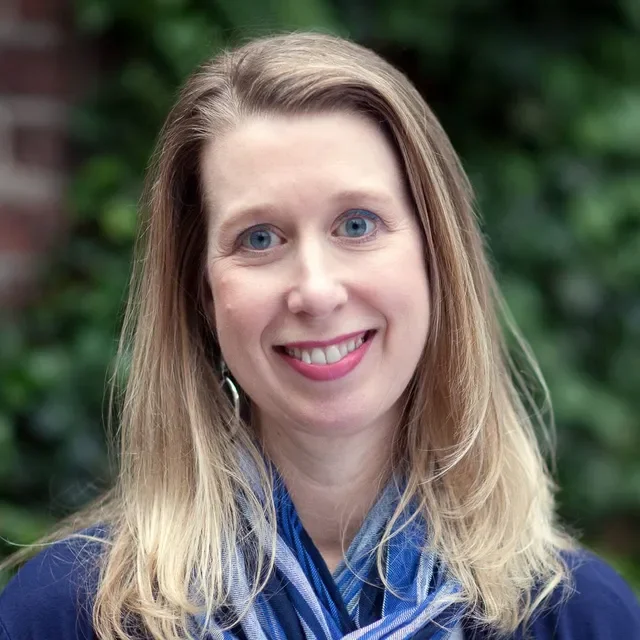
Shannon Kiser, Senior Director, Fresh Expressions
One of the things that seems to be disappearing from our common life is the ordinary spaces where we encounter people who are different from us. We increasingly sort ourselves into communities of shared interests, beliefs, politics, and lifestyles. We have fewer reasons to spend time with people we don't already understand or agree with. When our church opened a coffee shop, we did so not to just serve church people good coffee, but to create a space where a broad and diverse cross-section of our community would experience radical hospitality and an environment for natural collisions, which lead to conversations, which lead to meaningful connections. On any given day in our coffee shop, you’ll see parents of young children connecting while their children play, the unhoused light up when they are welcomed to have a coffee and relax for a spell, business executives working out million-dollar deals, public school teachers gathering for in-service training, Muslim immigrants sharing tea and conversation, college students studying, cyclists taking a refreshment break, and more.
Proximity creates the opportunity for bridge building. However, simply putting people in the same room is not in itself bridge building. HOW we inhabit spaces with each other speaks volumes about whether we actually want to explore points of connection and live out a different way to be human together (which reflects the Way of Christ). What does that look like in our coffee shop? A mother raising neurodivergent children finds relief in a conversation that, for once, is not about her children’s behavior issues, but an opportunity to explore her hopes and fears for their future. She walks away with a companion to help her navigate the complex process of educational planning. Conversations behind the counter reveal that one of our baristas dreams of a career in theater. So we give him the opportunity to develop and perform a one-act play, with all the ticket proceeds going to him, because we want to nurture something that brings him deep joy. A young Muslim woman witnesses Christlike compassion surrounding a family grieving a tragic suicide. The experience touches something deep within her, and she shares her own story, allowing her grief to be met with compassion and grace. An unhoused man who is often overlooked by others receives a hot cup of coffee, a fist bump, and the simple dignity of being seen. Over time, he becomes one of the people most committed to helping protect the safety and comfort of other patrons.
What we are learning is that to be a compelling bridge builder today is not about arguments nor dispatching information. It is living out the beautiful--and messy--reality of inhabiting difference with presence and curiosity. Rather than pushing for an agenda or an outcome, we are discovering that in actually caring about people (whether they are into our thing or not), and caring about the things they care about, there are endless opportunities for spiritual conversations. We can't manufacture those moments or determine where every conversation will lead. But we can create spaces where people experience something of the life of the Gospel before they have the words to describe it. Or as Paul describes in 1 Thessalonians 2:8: " Because we loved you so much, we were delighted to share with you not only the gospel of God but our lives as well.” Perhaps one of the most compelling ways to build a bridge to Jesus in an age of polarization is not with a script or a well-developed defense, but by getting closer to the everyday rhythms of our community, and sharing our lives with people, right where life is already happening.
Fostering Trust Through Play
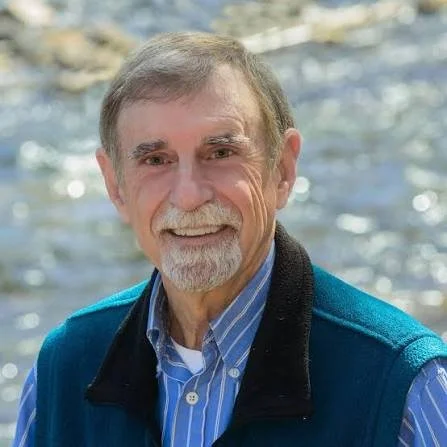
Ken Powley, Co-Founder and Chair of the Board, Team Democracy
At the American Democracy Summit several years ago, a speaker in one of the breakout sessions suggested that as Americans with deep differences, we all need to begin thinking, talking and acting as if we are all in the same boat together, because we are.
At Team Democracy, we took that advice to heart - literally - by launching R.A.F.T. (Reuniting America by Fostering Trust).
The idea is a simple one: give people with wildly divergent points of view a few hours of shared, real life experience (in a raft), where
they need to step outside their comfort zone
they share an exciting and enjoyable experience together
they get to know one another as fellow human beings
they need to work together for their own success and enjoyment
they connect in ways that make difficult conversations easier and more natural
Science supports the notion that shared experiences - whether at play or at work - literally change the chemistry in our brains. That change doesn't remove our differences, but as demonstrated in this CBS coverage of a recent RAFT event in North Carolina, it does make those differences more manageable and less contentious. It makes conversation and connection across our differences more purposeful and productive. And it fosters the kind of collaboration and conversation that help nurture a more civil society and a healthier, more resilient democracy.
There are many other organizations that we’ve worked with over the years committed to countering the drivers of polarization, as well as our own experience by building bridges around issues such as animal treatment and early child development that we could reference, including our extended work with the Social Capital Campaign. But our personal experiences with family members, neighbors and coworkers is that it all comes down to relational trust. When Mark first started on Capitol Hill most members brought their families to DC while in office, and the five-day work week meant that regardless of partisan and ideological differences, they had the time and proximity to build relational capital. With “family friendly” voting Tuesday through Thursday, these opportunities are lost, as members are only required to be in Washington three days out of the week. Although we aren’t sure how to incentivize it, participation in hobbies and sports are perhaps the most viable tools to counter polarization. In fact, as Harvard reported “being a fan of the same team as someone who holds different political views increases feelings of mutual warmth while reducing political polarization. What’s more, these benefits are greater among those who care more about their teams. The more passionate the fan, the stronger the depolarizing effect.”
Perhaps the answer to counter polarization is to unplug MSNBC and Fox, and put on ESPN. For the record, this is Mark’s first year to formally draft a fantasy football team. And, since his team is top of the league, it probably won’t be his last.
Post Script: A few years ago we undertook a comprehensive landscape analysis of bridgebuilding groups for a client and want to highlight some of our trusted partners: More in Common, Listen First Project, Bridge Entertainment Labs, One America Movement, Bridge Alliance, Convergence, and Braver Angels. And please check out our website for inspiration on how Clapham works to pursue common cause, uncover common ground, and advance the common good.