Weeds are flowers, too, once you get to know them.
– Winnie the Pooh
Tomorrow, America’s destiny hangs in the balance of the elections’ outcome. At least that is what our right and left voices are telling us.
By the end of the day, Americans will absorb the final surge of the most expensive political advertising cycle in our history. The ad-tracking firm AdImpact projects a record $11.6 billion in political ad spending for 2026, more than the 2024 presidential year.
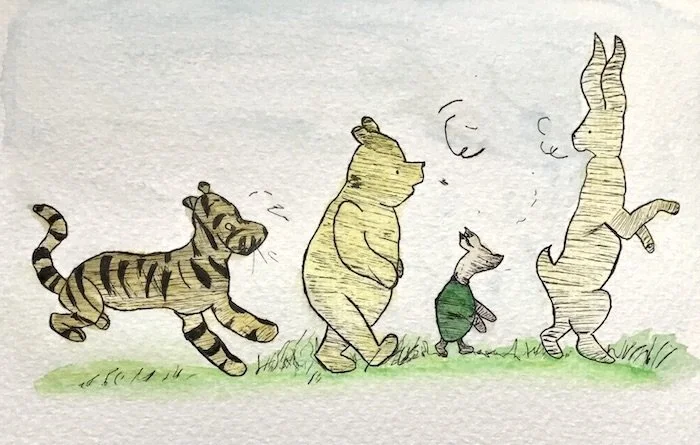
As a remedy for your wellbeing and for rebuilding social capital, I am going to suggest that rather than listen to political pundits, you listen to Winnie the Pooh.
Most of the money is not spent persuading us of something true. It is spent persuading us that our neighbor is dangerous. And when the votes are counted on November 3, the noise will not stop. Both parties will spend the next two years posturing toward 2028, and the content streaming into our phones, feeds, and living rooms will keep sorting us into camps.
So here is our proposal for the season ahead. Go back to the children's shelf and reread the stories we read when we were small, and the ones we read to the small people in our lives that remind us of what is universal and true. That is the thing we most need to remember right now, and that the outrage culture and polarization profiteers want us to forget.
Jesus reminded us about the deepest truths of the universe, that God “hid these things from the wise and prudent, and hast revealed them unto babes” (Matthew 11:25).
Washington is run by the wise and prudent via strategists, pollsters, and message testers. Jesus is not dismissing intelligence; rather, He is saying that the deepest things of life such as love, grace, and self-sacrifice are not earned through cleverness but received like a child.
Children's stories work on the same principle. They do not argue us into the truth. They show it to us, and they trust us to see it.
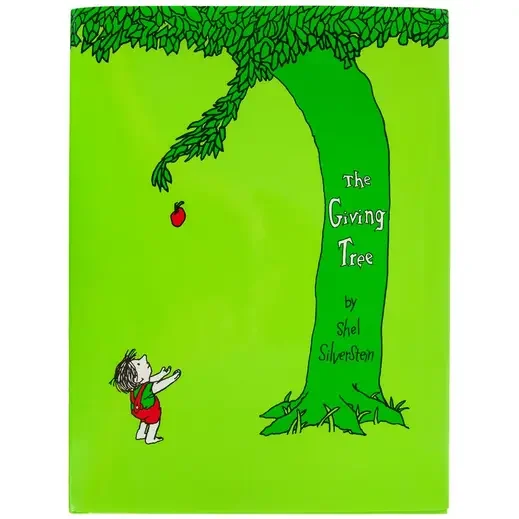
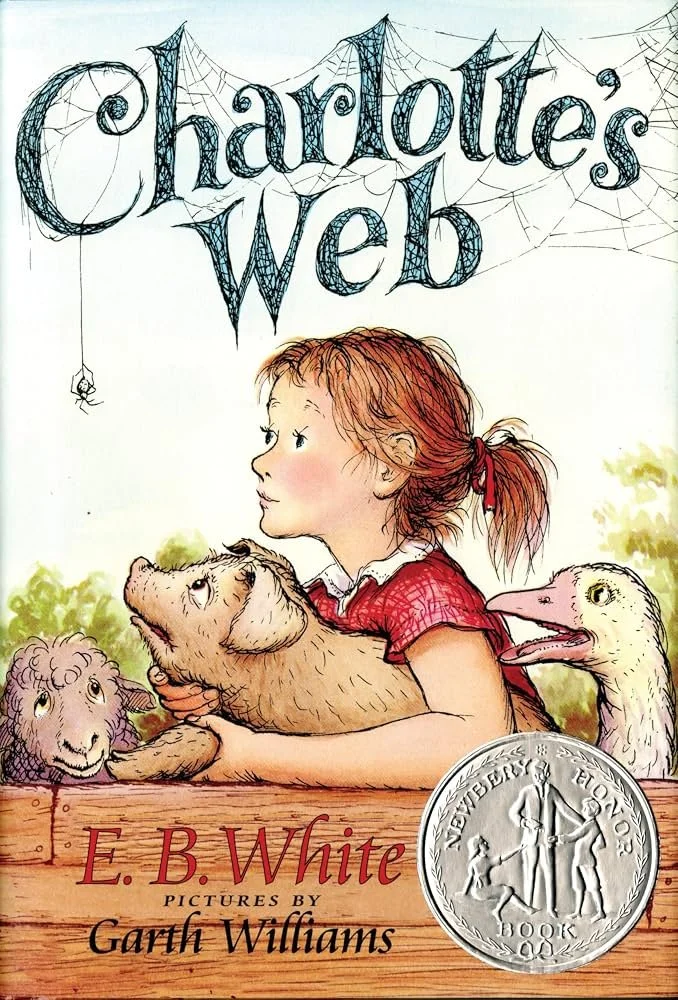
No one understood this better than C.S. Lewis who, in his 1952 essay "On Three Ways of Writing for Children," insisted that "a children's story which is enjoyed only by children is a bad children's story." Good children's stories are not a lesser form. They are a distilled one.
In a later essay, "Sometimes Fairy Stories May Say Best What's to Be Said," Lewis explained why he wrote Narnia. He believed a story could slip past the "watchful dragons" of our resistance: the stiff sense of religious obligation, the defensive posture that keeps us from feeling the weight of things we already know. Strip away the stained glass and the Sunday-school tone, he reasoned, and the truth might appear in its real power.
The watchful dragons of our moment are political. We hear a claim and instantly sort it by tribe before we weigh whether it is true. A story about a lion, a bear, or a boy with a kite gets past that sorting. No one asks which party Aslan belongs to.
Lewis dedicated The Lion, the Witch and the Wardrobe to his goddaughter with the line: "Some day you will be old enough to start reading fairy tales again." Many of us, I suspect, have reached that age.
Lewis learned this lesson from George MacDonald. As a teenager, he picked up MacDonald's Phantastes almost by accident at a railway bookstall. Decades later, in his preface to George MacDonald: An Anthology, he wrote that what the book "actually did to me was to convert, even to baptise" his imagination. This spring, our Cave Pictures Publishing released Phantastes as a graphic novel, adapted by Meredith Finch, so that a new generation of readers can meet the book that baptized Lewis's imagination.
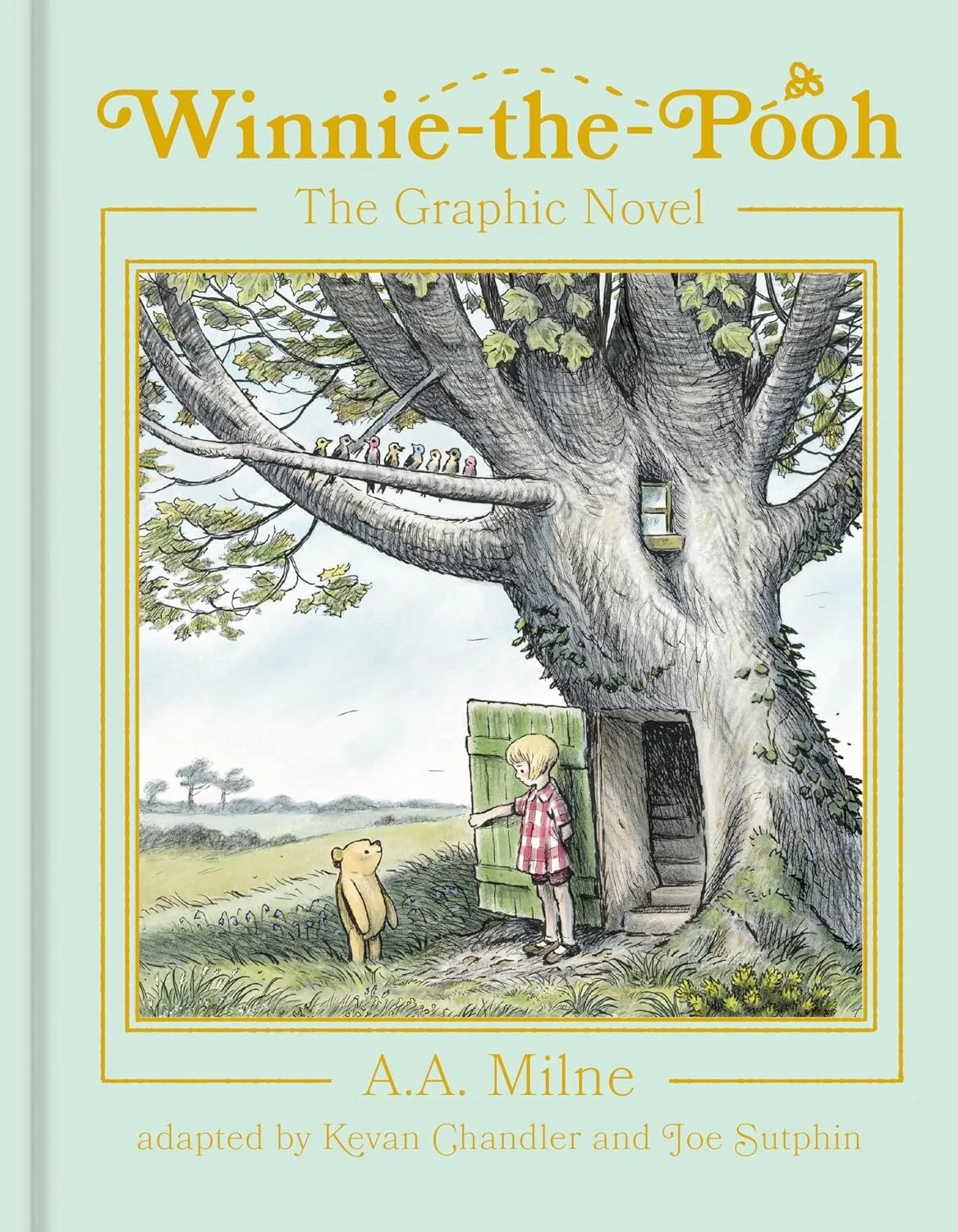
This month marks a century since A.A. Milne first published Winnie-the-Pooh in 1926. To celebrate, my friend Joe Sutphin, the Eisner Award-winning illustrator of Watership Down, and Kevan Chandler released Winnie-the-Pooh: The Graphic Novel on October 13. Joe sent me a pre-release copy, and it is simply amazing!! It is faithful to Milne, gentle in its colors, and full of the unhurried wonder the Hundred Acre Wood was made for. If you have a child or grandchild in your life, get it into their hands, and then borrow it back.
Benjamin Hoff's 1982 bestseller The Tao of Pooh offers insight from a different tradition than mine. Writing as a Taoist, he used Milne's characters to argue that simplicity is a kind of wisdom. Owl hoards knowledge for its own sake. Rabbit calculates. Eeyore complains. Pooh, the bear "of very little brain," is simply present, kind, and content, and somehow things go well around him.
Hoff's most memorable creation is the "Bisy Backson," Rabbit's harried figure who is always rushing off somewhere, chasing a reward that keeps receding. Read it today, and you will recognize the doomscroller. The outrage cycle is the Bisy Backson embodied … perpetually urgent, forever agitated and never arriving.
I don't share Hoff's Taoism, but his diagnosis rhymes with Matthew 11. The truth is not usually hidden in the complicated thing. It is in the plain thing we were too busy to notice.
This summer Leanne and I made a pilgrimage to Santa Rosa, California, Charles Schulz's longtime home and the site of the Charles M. Schulz Museum. Standing in front of the original strips, drawn by one man's hand for nearly fifty years, you feel how much honesty, faith, and tenderness he packed into those small panels.
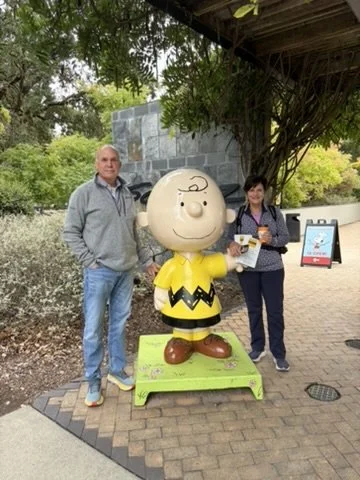
Charles Schulz's Peanuts may be the most honest portrait of the human condition ever drawn in four panels. Charlie Brown loses. Lucy pulls the football away, every time. Linus clings to his blanket. In 1965, Robert Short's The Gospel According to Peanuts argued that the strip was, in a sense, preaching by “diagnosing our fallenness with a smile, so that we might notice our need for grace."
What you notice about the Peanuts gang is that they argue constantly. Lucy and Linus bicker; Schroeder ignores everyone; Lucy misses every fly ball and blames the sun. And yet they keep showing up for the same hopeless baseball team, season after season. Their disagreements never dissolve the neighborhood. That is a picture of civic life we have nearly lost.
Another storyteller I admire was Fred Rogers, an ordained Presbyterian minister, who spent more than three decades telling children they were loved. He saw it as a ministry. "I think Jesus delighted in the presence of children," he told Presbyterians Today in 1998.
His most powerful teaching tool was his imagined land. In every episode, a little red trolley carried viewers out of Mister Rogers' television house and into the Neighborhood of Make-Believe, a kingdom of puppets and people where King Friday, Daniel Striped Tiger, Lady Elaine Fairchilde and the rest wrestled with fear, jealousy, anger and loneliness, and found their way to kindness. In that small kingdom, a child could face what was too big to face head-on, and learn what it means to love a neighbor.
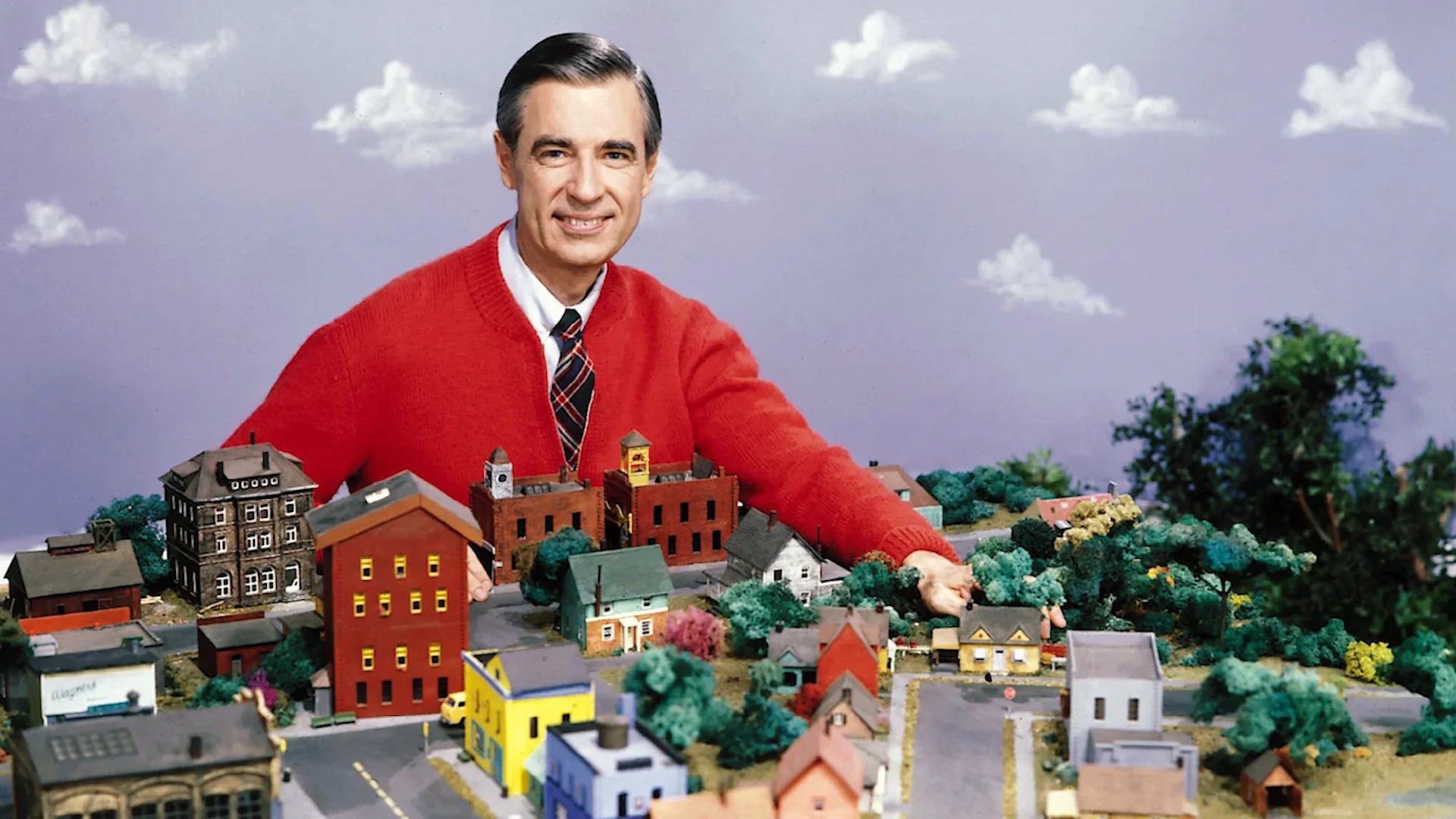
Consider the program's very first week, in February 1968. King Friday XIII, unsettled by changes in his kingdom, grows afraid of anyone who might change it further. He posts guards and orders a wall built around the castle. His neighbors do not answer with a wall of their own. Lady Aberlin, Daniel Striped Tiger and X the Owl float balloons over the castle carrying messages of love and peaceful coexistence. The king reads them, his fear gives way, and the wall comes down. That same week, Rogers sang to his young viewers, "I like you as you are."
That is not sentimentality. It is the opposite of the message political advertising is built to deliver, which is that the person across the aisle is not acceptable at all. Rogers's whole neighborhood rested on a conviction he described to Christianity Today: if someone cares about you, you become capable of caring for others. Love received makes love possible. That is Matthew 11 in a cardigan.
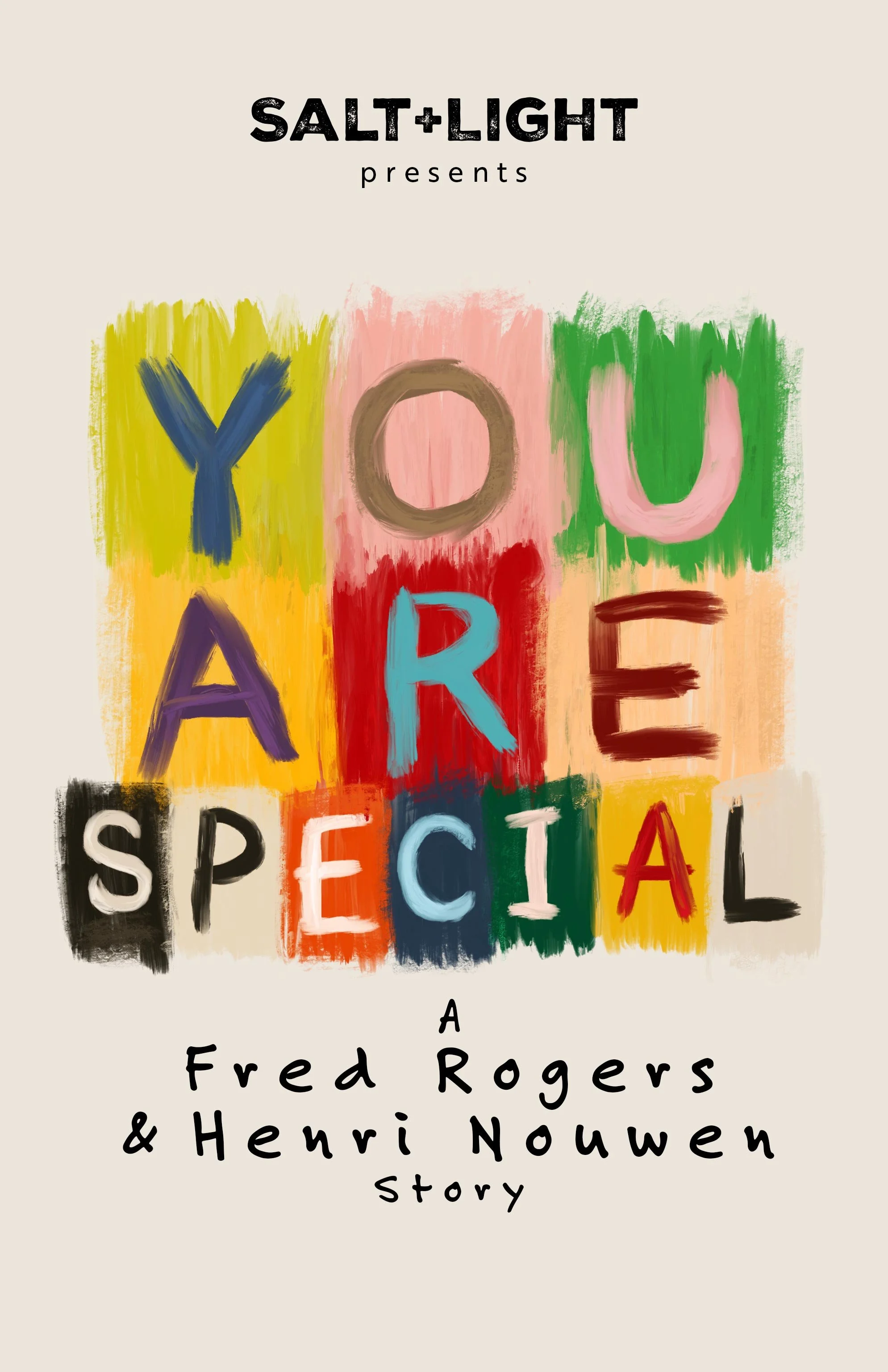
Rogers drew deeply from his friendship with Henri Nouwen, the Dutch priest who left the halls of Harvard and Yale to live among people with intellectual disabilities at L'Arche. Our Salt and Light Stories Substack recently told their story in a "What If" mini-comic imagining the two men on a road trip together. I commend it to you, and to the children in your life.
Another graphic novel coming out by a friend of mine, Ben Hatke, is the commissioned work of The Magician’s Nephew by C. S. Lewis. Next year a new generation will meet Lewis's work on the big screen. Greta Gerwig's take on The Magician's Nephew opens in theaters and IMAX on February 12, 2027, and arrives on Netflix in April. It is the first screen adaptation of the book that tells how Narnia began.
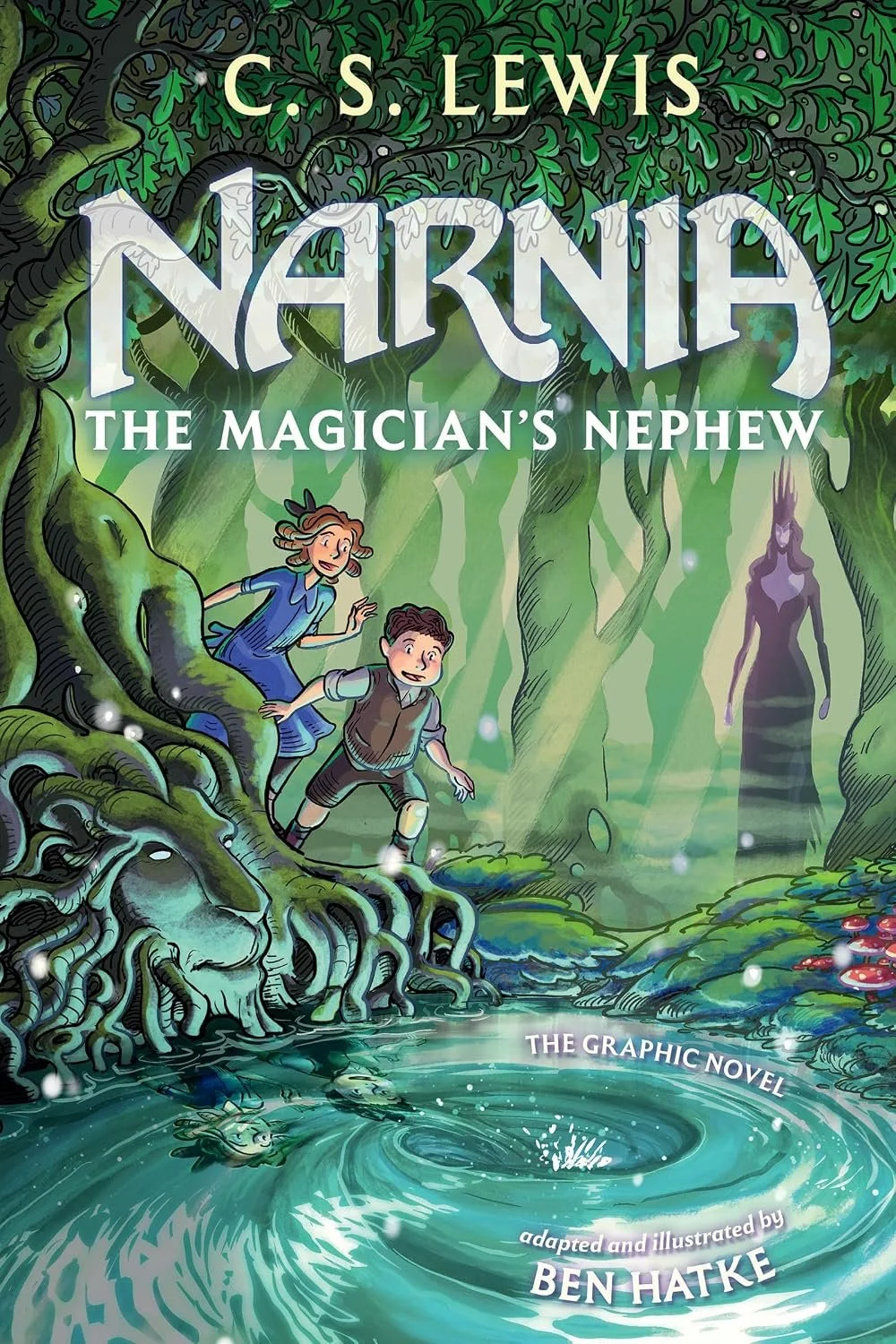
I'll confess some reservations with the casting of Meryl Streep as the voice of Aslan, but the story could not be more timely. In it, two worlds turn on the power of words. In the dead world of Charn, the witch Jadis tells how she spoke the "Deplorable Word," destroying every living thing rather than lose control to her rival. In the newborn world of Narnia, Aslan sings creation into being, and the stars, the hills, and the talking beasts rise up in answer to his song.
But note that there is Uncle Andrew, the clever, self-important magician who stands in the middle of creation and hears only a lion roaring. He cannot hear the song because he has made himself the kind of man who cannot hear it. Lewis's warning is that what we perceive depends on where we stand and what we have become. Two years of steady outrage can make all of us Uncle Andrews.
We cannot opt out of the next two years. Elections matter, and citizens should engage them seriously. But we can choose what forms us while we do.
So reread the children's books. Pull The Magician's Nephew off the shelf or order Ben’s take before the film arrives, and read it aloud to a child or grandchild. Find the old Peanuts collections and watch A Charlie Brown Thanksgiving again. Stream Mister Rogers with someone young enough to need him, and notice that you need him too. Order Joe and Kevan’s Winnie-the-Pooh graphic novel and let a bear of very little brain slow you down and remind you what is really important.
These stories will not tell you how to vote. They will remind you of things that are true for everyone on both sides of the aisle: that we are all fallen and all beloved, that the humble often see what the clever miss, that words can wound a world or sing one into being, and that a neighbor is someone you keep showing up for.
Jesus said these things were revealed unto babes. Perhaps the way back to one another begins where we first learned them.
How do you spell 'love'?" – Piglet
"You don't spell it...you feel it” – Pooh